
Why Pool Decking Matters
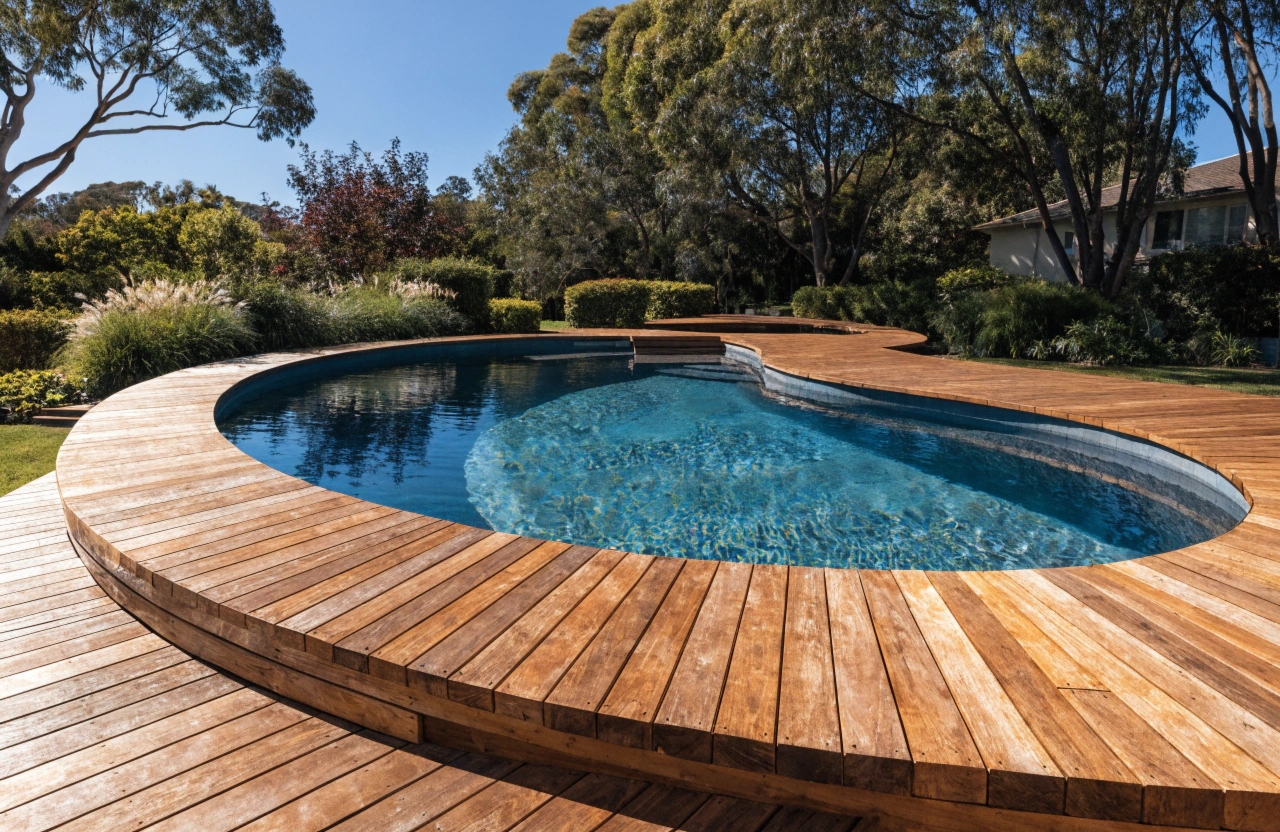
Pool decking plays a functional and aesthetic role around any backyard pool. The right material and layout improve poolside safety underfoot, create clear zones for lounging, dining, and entertaining, and add genuine value to the property by finishing off what is often the most visible part of the outdoor space.
A pool deck carries different demands to a standard residential deck. The area sits in constant contact with moisture, splash-out, and pool chemicals, so material selection, drainage design, and safety compliance all shift compared to a deck built over dry ground. Board spacing, fall, and subframe ventilation all need to account for water that a typical deck simply never encounters.
Safety sits at the centre of the design as much as appearance does. A pool deck needs to stay slip resistant when wet, drain quickly enough to avoid pooling, and integrate cleanly with pool fencing and gate compliance. None of this happens by accident — it comes down to correct board selection, orientation, and fixing from the outset.
Getting these fundamentals right means the finished deck looks good and performs safely around water for the long term, rather than becoming a maintenance issue or a safety concern down the track.

Slip Resistance & Safety Compliance
Slip resistance carries more weight around a pool than on any other part of a deck, and it deserves its own space in the planning process rather than an afterthought once the material is chosen.
AS 4586 sets out the wet area slip resistance classifications that apply to pool surrounds, and the NCC includes its own requirements for the pool area specifically. Meeting these standards isn’t just about the board itself — board profile, surface texture, and fixing orientation all play into the final slip resistance outcome. A board that performs well in a dry area can behave completely differently once it’s wet underfoot, which is why pool-specific selection matters.
Building a pool deck means building toward a set of safety outcomes as much as an aesthetic one. Getting the surface texture, drainage, and compliance details right from the design stage protects everyone using the pool area, from young kids running around after a swim to guests moving between the water and the entertaining zone.
Our approach to pool decking starts with these compliance requirements rather than treating them as a box to tick at the end. Pool safety and finished appearance work together rather than against each other when the deck is planned properly from the outset.
Pool Deck Design Considerations
A well-designed pool deck brings together a number of details that all affect the finished look and how the area performs day to day.
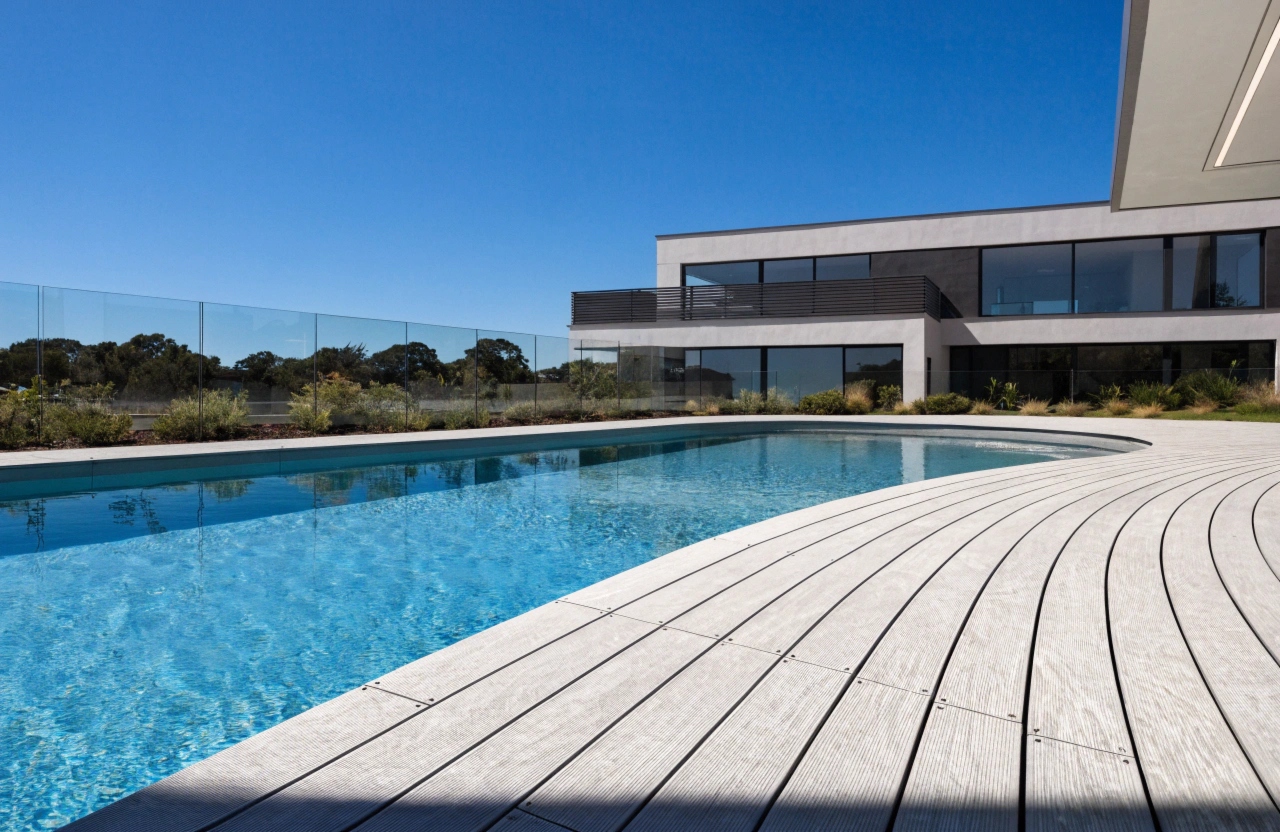
Board orientation relative to the pool edge affects both drainage fall and visual flow, and getting this right from the layout stage avoids water pooling in the wrong places. Coping and edge detail options finish off the transition between deck and pool, and the choice here has a real impact on the overall aesthetic.
Pool fencing and gate compliance under AS 1926.1 need to be factored into the deck design from the start, since the deck and fencing work together as part of the pool barrier. Step and stair construction at entry and exit points needs careful thought too, particularly around tread depth and grip underfoot.
Lighting integration is worth planning for evening use, extending the usable hours around the pool well past daylight. Deck height relative to the pool coping also affects the finished look and how well the area drains, so this gets worked out early rather than adjusted after the fact.
Every one of these details plays into the final result, and thinking through them together at the design stage delivers a pool deck that looks right and functions properly for years to come.
Drainage & Subframe Design
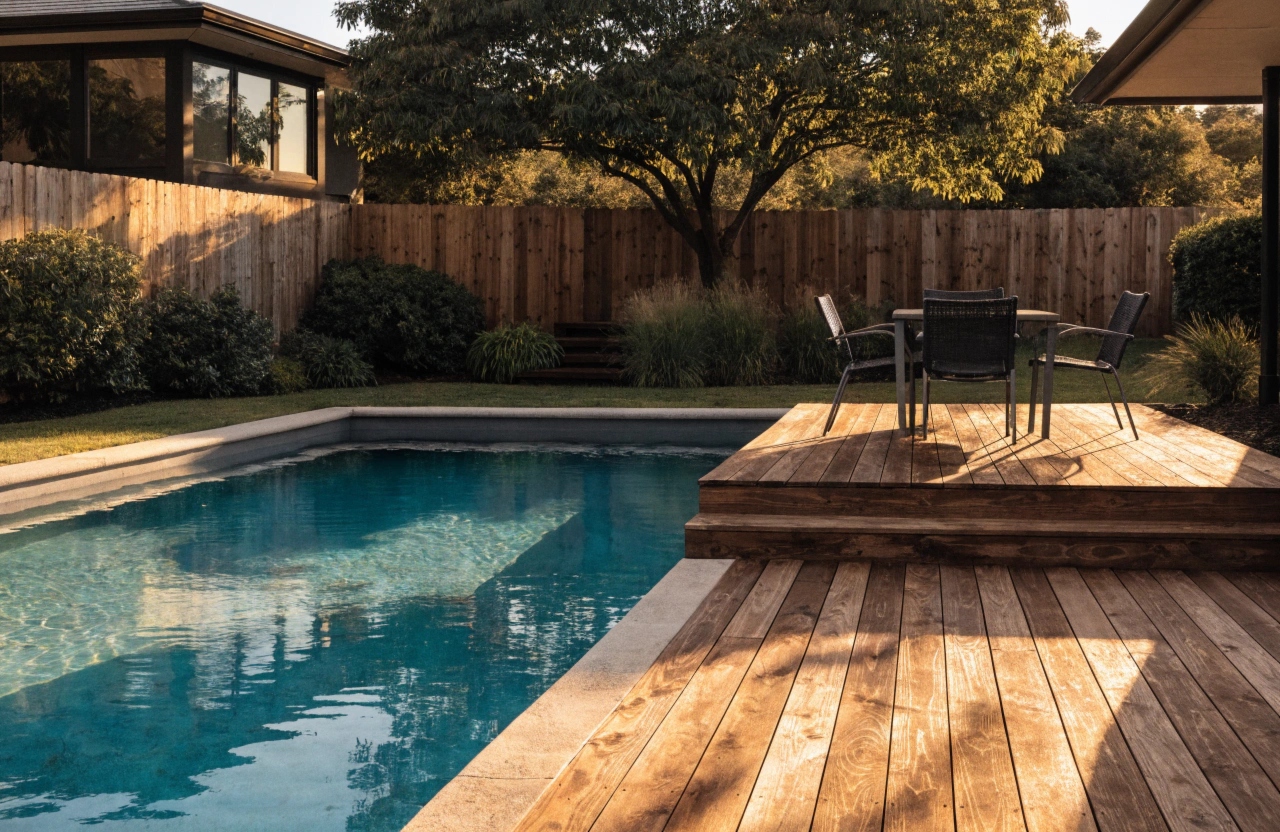
What sits underneath a pool deck matters as much as what sits on top, given the amount of moisture the subframe deals with day in, day out.
Correct fall away from the pool structure stops water pooling against the pool edge or beneath the deck itself, directing moisture where it needs to go rather than letting it sit and cause problems over time. Subframe ventilation matters more here than on a standard deck, since the area beneath a pool deck sits in a permanently damp environment and needs airflow to avoid moisture building up unchecked.
Joist and bearer material selection needs to account for this constant moisture exposure too, with materials chosen for their ability to handle a wet environment rather than the drier conditions a typical backyard deck sits over. Fixings matter just as much — stainless steel or hot-dipped galvanised fixings are used throughout to prevent corrosion from pool chemicals, chlorine, and salt water exposure over the life of the deck.
None of this is visible once the deck is finished, but it’s the part of the build that determines how well the deck holds up over the years ahead. A pool deck built on a properly designed subframe stays solid and dry underneath, protecting the investment in the visible timber or composite surface above.
Compliance & Licensing
Pool decking sits within a framework of requirements that go beyond a standard residential deck build, given its relationship to the pool barrier itself.
The NCC sets out requirements for pool barriers, and deck construction can directly affect pool fence compliance depending on how the two interact. A deck built too close to the fence line, or at the wrong height relative to the barrier, can compromise compliance even if the deck itself is built well. This is a detail worth working through at the design stage rather than discovering after the build.
Decks over 1m in height fall under licensed builder requirements in NSW, and council approval can also come into play where pool decking alters site coverage or encroaches on setbacks. These requirements vary depending on the specific site and existing structures, so they’re worth checking early in the planning process.
Building with these requirements in mind from the outset means the finished pool deck sits comfortably within the rules that govern pool areas, rather than creating compliance issues that need addressing after the work is done. Our approach folds these considerations into the design and build process from the first conversation, so the pool area stays compliant as well as looking the part.
Frequently Asked Questions
Both timber and composite suit pool surrounds when specified correctly. Hardwoods like merbau and spotted gum offer natural grip, while composite boards like ModWood and Ekodeck offer low maintenance and consistent slip resistance ratings under AS 4586.
Yes. Pool decking sits under AS 4586 wet area slip resistance classifications and NCC pool barrier requirements, alongside drainage and subframe considerations that a standard residential deck doesn’t need to account for.
Deck height and positioning relative to the pool fence can affect barrier compliance under AS 1926.1. This gets factored into the design stage so the finished deck and fencing work together correctly.
Timber around a pool needs regular oiling to prevent drying and cracking from the wet-dry cycle. Composite boards hold their colour and finish without oiling, making them a lower-maintenance option poolside.
Dark boards retain more heat in full sun than lighter colours, in both timber and composite. This is worth weighing up for bare feet and comfort during Newcastle’s summer months.
The area sits in constant contact with moisture and splash-out. Correct fall away from the pool, along with subframe ventilation, stops water pooling and protects the structure underneath over the long term.
Stainless steel or hot-dipped galvanised fixings are used throughout pool deck subframes to prevent corrosion from pool chemicals, chlorine, and salt water exposure over the life of the deck.
It depends on the site. Council approval can come into play where pool decking alters site coverage or encroaches on setbacks, so this is worth checking early in the planning process.
Yes, pool decking is regularly added or replaced around established pools across Newcastle suburbs like Merewether, New Lambton, Charlestown, and Eleebana as part of broader outdoor renovations.
Decks over 1m in height fall under licensed builder requirements in NSW. This applies to many pool deck builds given typical deck heights relative to pool coping.
Get a Free Pool Decking Quote in Newcastle
Pool decking needs more thought than a standard residential deck, from slip resistance and drainage through to how the finished structure sits alongside the pool fence. A free on-site measure and quote is the best starting point, letting us walk the pool area with you, talk through material options, and work out a design that handles safety, compliance, and drainage properly from the ground up.
Whether the project is a full pool area transformation or replacing tired decking around an established pool in Merewether, New Lambton, Charlestown, Eleebana, or elsewhere across Newcastle, we bring the same attention to subframe design, fixings, and compliance to every build. Getting these details right from the start protects the pool area and keeps it looking and performing well for years to come.
Reach out for a free on-site measure and quote, and we’ll help map out the right approach for your pool decking project. For related projects, explore our timber decking, composite decking, ModWood deck installation, Ekodeck composite decking, and ground-level deck building pages, or head back to our main Deck Builder Newcastle page for the full range of decking services we offer across the region.
