
Do I need council approval to add a balcony in Newcastle?
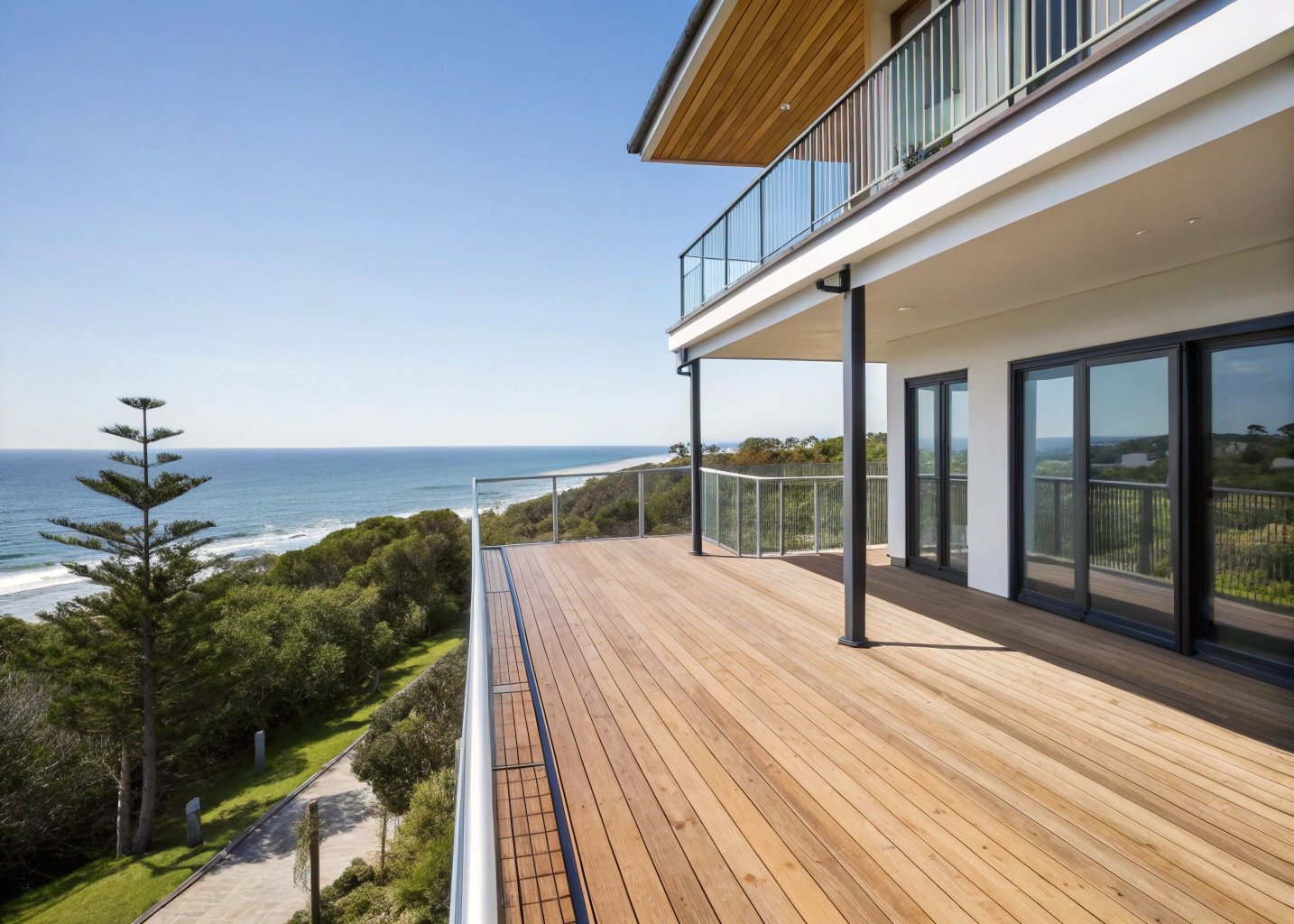
Most new balcony additions on two-storey homes in Newcastle will not qualify as exempt development. Here’s why, and what applies instead:
- Exempt Development — Only applies where the balcony floor sits no higher than 1 metre above ground and the total area is under 25m². For most true balcony additions on a two-storey home, the height alone rules this out.
- Complying Development Certificate (CDC) — The most common approval pathway for elevated balcony additions. Assessed and approved by a private certifier rather than council. Faster than a DA when NCC requirements are met.
- Development Application (DA) — Required for heritage-listed properties, flood or bushfire-prone land, or builds in front of the primary building line. Hamilton and Merewether both have heritage conservation areas where this applies.
- Structural Certification — Required at key stages of the build regardless of which approval pathway applies. This isn’t optional — it applies across all three pathways above.
Not sure which pathway applies to your property? We offer a free on-site consultation and will walk you through your options before you commit to anything.

The Structural Complexity Behind Balcony Construction
Balcony construction is a different category of work to building a deck at ground level.
The core challenge is load transfer. When you add a balcony to an existing home, the weight of that structure — plus everyone and everything on it — has to be carried back into the home’s existing frame or foundation. That’s not a simple connection. It requires a structural engineer to assess whether the existing structure can actually handle it before any planning or building begins.
We coordinate that engineering process directly. We engage the engineer, manage the assessment, and work from their design through to the finished build. That’s not something we hand to the homeowner to sort out separately.
This is where a lot of balcony projects go wrong — builders who skip the engineering step early, or treat it as the client’s problem to manage. The structural assessment isn’t a box-ticking exercise. It’s what the rest of the build depends on.
Balcony Types and Which One Suits Your Newcastle Home
The right balcony type is determined by your home’s existing structure, not by preference alone. Here’s what’s available and where each one fits.
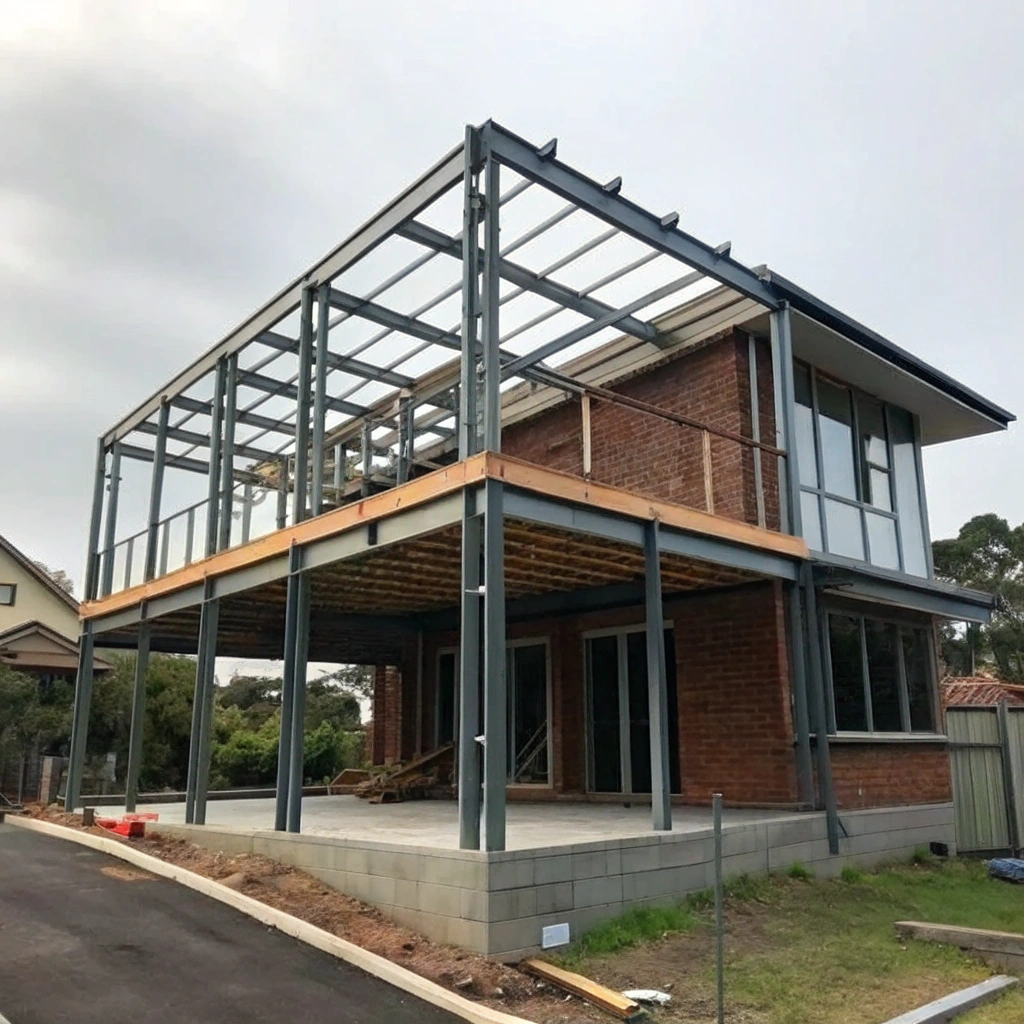
Waterproofing and Drainage for Balconies Over Habitable Spaces
Waterproofing failure is the most common and most costly defect in balcony construction.
The Australian standard that covers this is AS 3740. Where a balcony sits over an enclosed room — a bedroom, living area, or garage — a full membrane system is required. Drainage design matters just as much. The floor needs to slope toward outlets at the right gradient, with downpipes and box gutters planned as part of the build from the start.
Newcastle’s summer storms are the real test for any waterproofing system. Heavy rain in short bursts will find any weak point fast.
We apply AS 3740 on every balcony we build. The membrane is inspected before the decking surface goes down — that inspection is part of the certification process, and we don’t skip it.
Balustrade Options and NCC Safety Compliance
Before material choice comes compliance. The National Construction Code (NCC) sets minimum requirements for any balcony balustrade — minimum height of 1 metre, restrictions on climbable elements, and structural load requirements at every connection point. These aren’t optional on an elevated structure.
| Material | Aesthetic | Maintenance | View Impact | Coastal Suitability |
|---|---|---|---|---|
| Toughened glass | Premium | Low | None | High |
| Stainless cable | Contemporary | Low–medium | Minimal | High |
| Powder-coated steel | Versatile | Low | Moderate | Medium |
| Timber | Warm, traditional | Medium–high | Moderate | Medium |
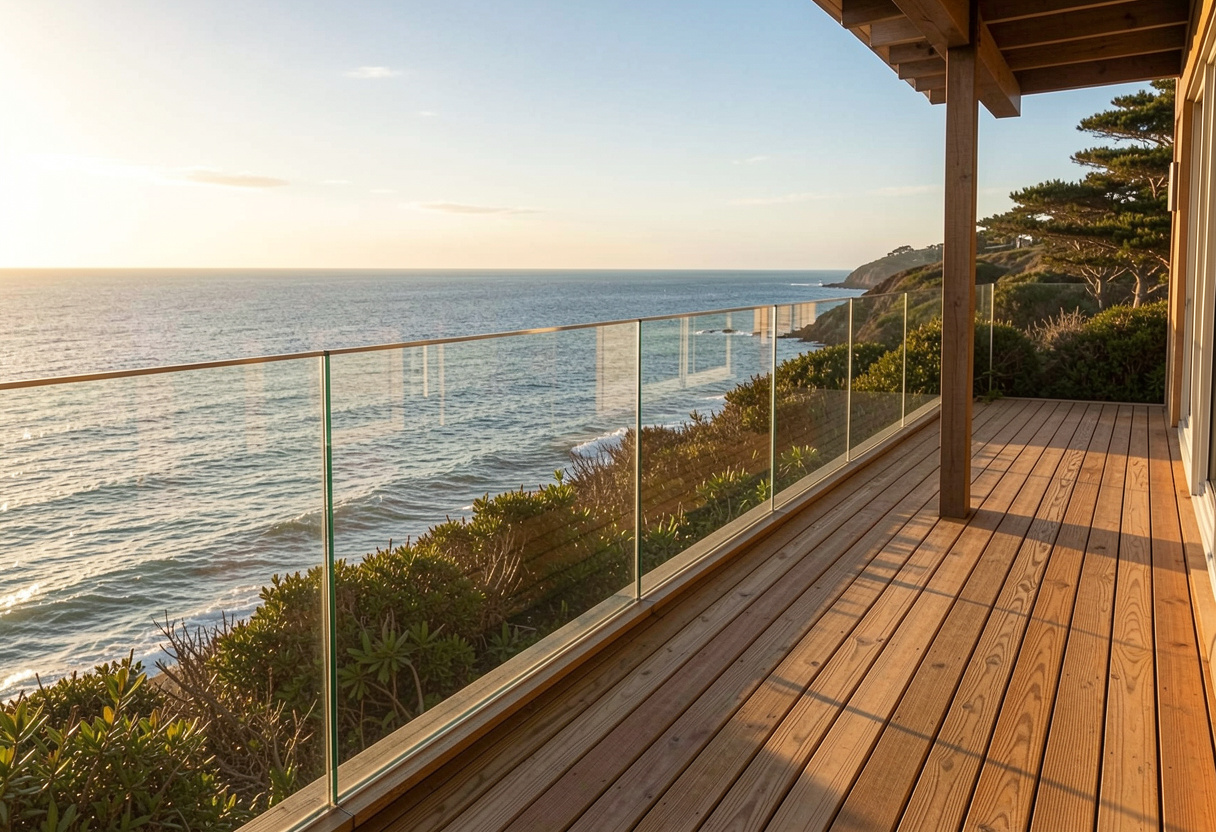
For coastal-facing properties in Merewether, Bar Beach, and Newcastle East, glass and cable are the dominant choice where open sightlines to the ocean are the priority. Both handle salt air exposure well — an important consideration this close to the coast.
Decking Surface Materials for Balconies
Material selection for a balcony comes down to two things ground-level decking doesn’t have to worry about: structural weight load and compatibility with the waterproofing membrane underneath.
Timber Hardwood: Merbau, spotted gum, and blackbutt all look great but require regular maintenance. Access for oiling and sanding is harder at height, and salt air in Newcastle’s coastal suburbs accelerates weathering.
Composite Decking: Low maintenance — which matters more on a balcony where getting up to do upkeep isn’t easy. Check that the product is compatible with the membrane system underneath before specifying.
Tiled Finishes: A clean, seamless look increasingly specified on rooftop terraces and upper-level balconies. Heavier than timber or composite — the structural engineer needs to confirm the floor can carry the load before tiles go on the plan.


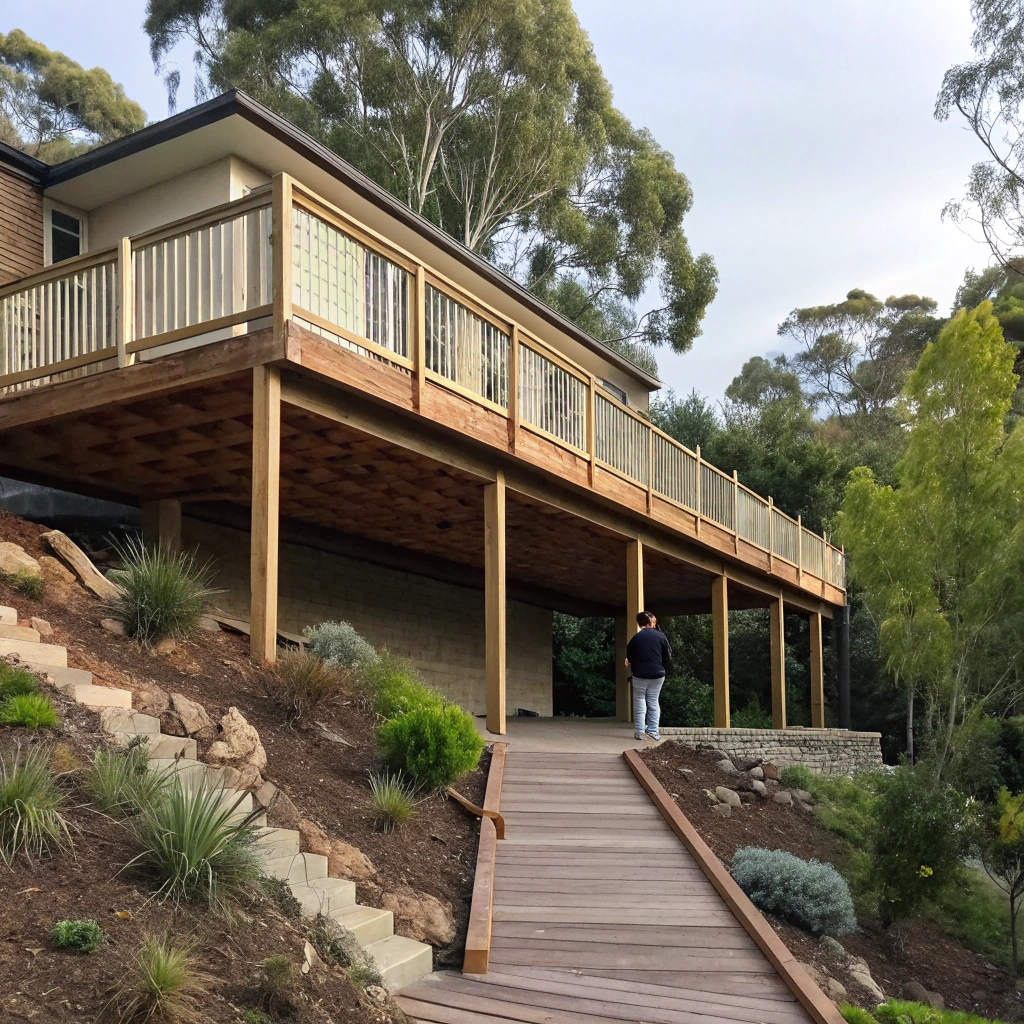
Approval Pathways for Newcastle Balcony Additions
- Exempt Development — No certifier required, but every single criteria must be met in full. The 1 metre height threshold effectively rules this out for most balcony additions on two-storey homes. Fast on paper, but rarely available in practice.
- Complying Development Certificate (CDC) — The most common pathway for elevated balcony additions. Assessed by a private certifier rather than council, which keeps timelines shorter than a DA. We coordinate the certifier engagement as part of our build scope.
- Development Application (DA) — Required for heritage properties, constrained sites, or builds that don’t meet CDC criteria. Hamilton and Merewether’s heritage conservation areas make this pathway more common in those suburbs, particularly on federation and interwar homes. Allow longer for council assessment.
- Structural Certification — Applies at key stages regardless of which pathway above is followed. Certifier inspections occur at footing, frame, and waterproofing stages. We manage the inspection schedule and documentation through to handover.
We determine the correct pathway at the initial site assessment. You don’t need to figure this out on your own before calling us.
The Balcony Construction Process — From Assessment to Handover
Most people want to know two things: what’s involved, and how long it takes. Here’s how a balcony build runs from start to finish.
- Initial site assessment — We visit the property, review structural feasibility, identify any site constraints, and confirm which approval pathway applies.
- Structural engineering — We engage the engineer directly. They assess the existing home structure and design the balcony connection. This confirms what can be built and how.
- Approval lodgement — We lodge and manage the CDC or DA. We set realistic timeline expectations at this stage so there are no surprises.
- Material selection and quoting — Full itemised quote provided once engineering and approval scope is confirmed. No hidden variables.
- Waterproofing and structural installation — Membrane system installed and inspected before the decking surface goes down. Certifier inspection at key stages.
- Balustrade installation — NCC-compliant balustrade fitted and connection points certified.
- Final inspection and handover — Certifier sign-off, full documentation package provided, occupation certificate issued where required.
If you’re working toward a summer completion — whether that’s a Christmas gathering or just making the most of the season — the earlier we do the site assessment, the more accurately we can map the timeline for your specific build.
Frequently Asked Questions
Most balcony additions in Newcastle fall somewhere between $15,000 and $45,000 depending on size, type, materials, and the approval pathway required. Cantilevered balconies and rooftop terraces sit at the higher end. We provide a full itemised quote once the engineering and approval scope is confirmed.
From initial site assessment through to handover, most balcony projects run between 8 and 16 weeks. The approval pathway is the biggest variable — a CDC is faster than a DA. We give you a realistic timeline at the site assessment stage.
Yes, always. Any balcony added to an existing home requires a structural engineer to assess whether the existing frame can carry the load and to design the connection. We engage the engineer directly — it’s part of our scope, not something you need to organise separately.
Not always. The existing structure has to be capable of supporting the additional load. Some homes aren’t suited to cantilevering and require a post-supported design instead. In some cases the existing frame needs reinforcement before a balcony can be added. We identify this at the initial site assessment.
A CDC is assessed by a private certifier and is generally faster than a DA. A DA goes through City of Newcastle and is required for heritage properties, constrained sites, or builds that don’t meet CDC criteria. We determine which pathway applies at the site assessment and manage the process from there.
If the balcony sits over an enclosed room — a bedroom, living area, or garage — a full membrane waterproofing system is required under Australian Standard AS 3740. We apply this standard on every balcony we build regardless of what the approval pathway requires.
Ready to Get Your Balcony Built? Talk to Decking Newcastle First.
Adding a balcony is one of the more involved builds a homeowner can take on. The structural assessment, the approval pathway, the waterproofing — there are a lot of moving parts, and the decisions made early have a big impact on how the rest of the job goes.
We offer a free on-site consultation where we visit your property, assess what’s structurally possible, and walk you through your approval options. No commitment required — just a clear picture of what your balcony project actually involves before you decide to move forward.
Call Decking Newcastle today on 0266991487 or fill out the contact form below with your name, phone number, suburb, and a brief description of your project and we’ll be in touch to book your site visit.
