
Handrails and Balustrades Newcastle Installed by Local Experts
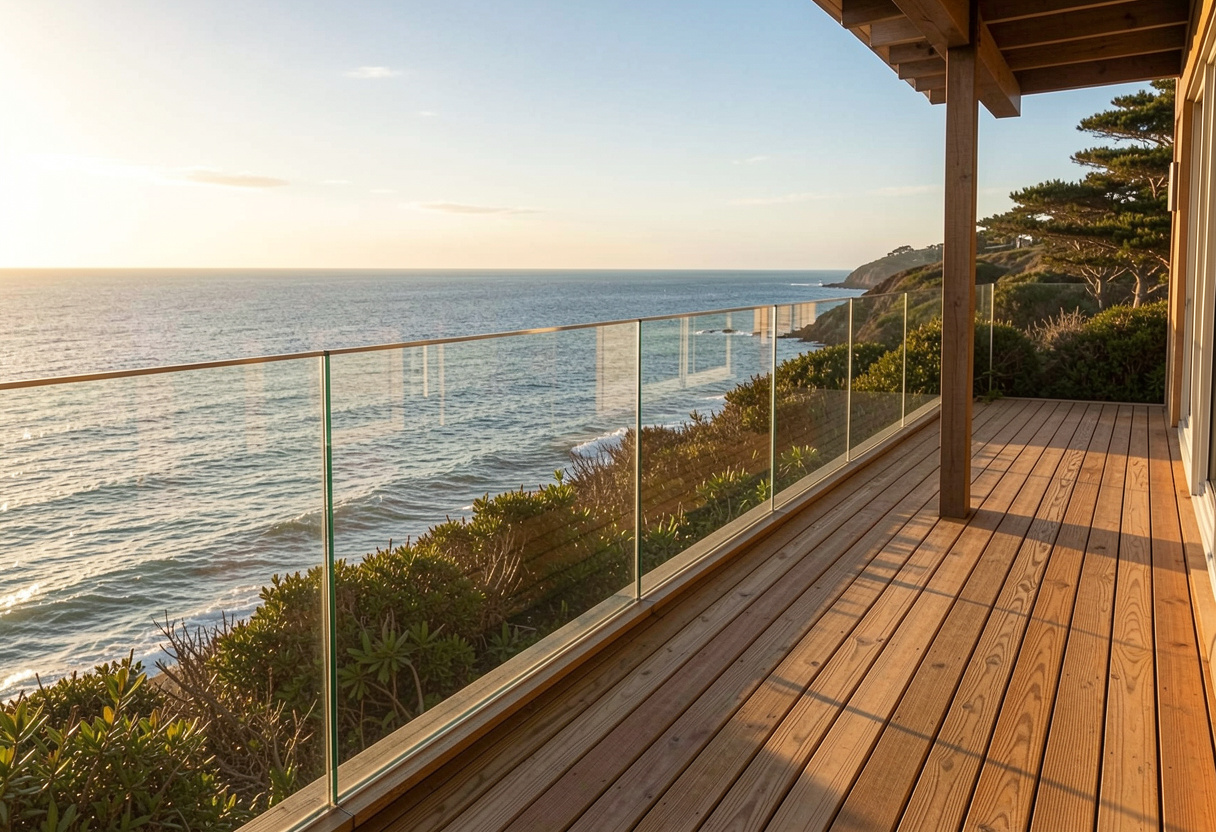
You’re standing at the top of your new deck steps and something just don’t feel right about that old handrail. Maybe its wobbling a bit when the kids lean on it, or maybe you’ve just finished a brand new elevated deck and realised the balustrade is the last piece missing before its actually safe to use. Either way, you’ve come to the right spot.
We’re Newcastle’s handrail and balustrade installation specialists, and we get called out across the Hunter region for exactly this reason — decks, balconies and staircases that look finished from a distance but aren’t actually compliant or safe once you get up close. Handrails and balustrades are some of the most visible finishing touches on any outdoor structure, but they’re also one of the most safety critical. Getting the material, the spec, and the install right isn’t just about how it looks, it matters just as much for council compliance and for keeping your family safe up there.

Balustrade Types & Materials We Install
NCC Compliance Requirements — What You Actually Need to Know
This is the section most contractors skip over and it’s the one that matters most. The NCC sets out specific rules for balustrades and a lot of older Newcastle properties simply don’t meet them — which is fine until you go to sell the house or until someone gets hurt.
Here’s what compliant actually looks like:
| Requirement | What It Means |
| Minimum height | 1000mm for decks over 1m above ground level, and for balconies |
| Climbability | No horizontal rails or infill that a child could use like a ladder to climb over |
| Structural load | Posts and top rails need to handle specified load requirements without flexing or failing |
| Gap spacing | Openings must be small enough that a 125mm sphere can’t pass through |
A lot of the older balustrades we see around Newcastle — particularly on weatherboard and brick veneer homes built decades back — have horizontal rail designs that look fine but fail the climbability test straight away. Kids see a horizontal rail as a ladder, simple as that. If you’re renovating or extending an existing deck, this is exactly the kind of thing that gets flagged at inspection and it’s a lot cheaper to fix during the build than after.
Handrail Installation
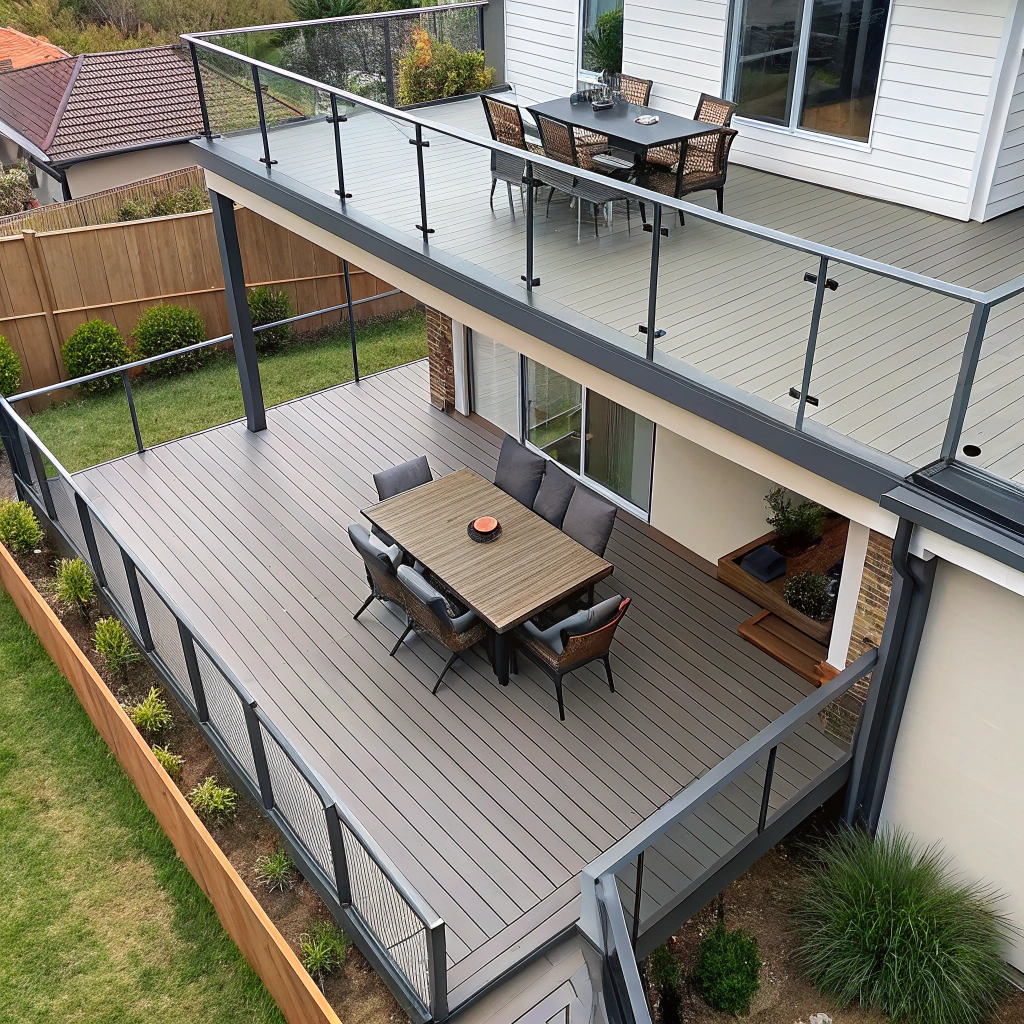
Handrails and balustrades get talked about like they’re the same thing, but they’re not. A balustrade is the whole barrier system along the edge of a deck or balcony. A handrail is specifically for stairs and ramps — something you grab onto going up or down.
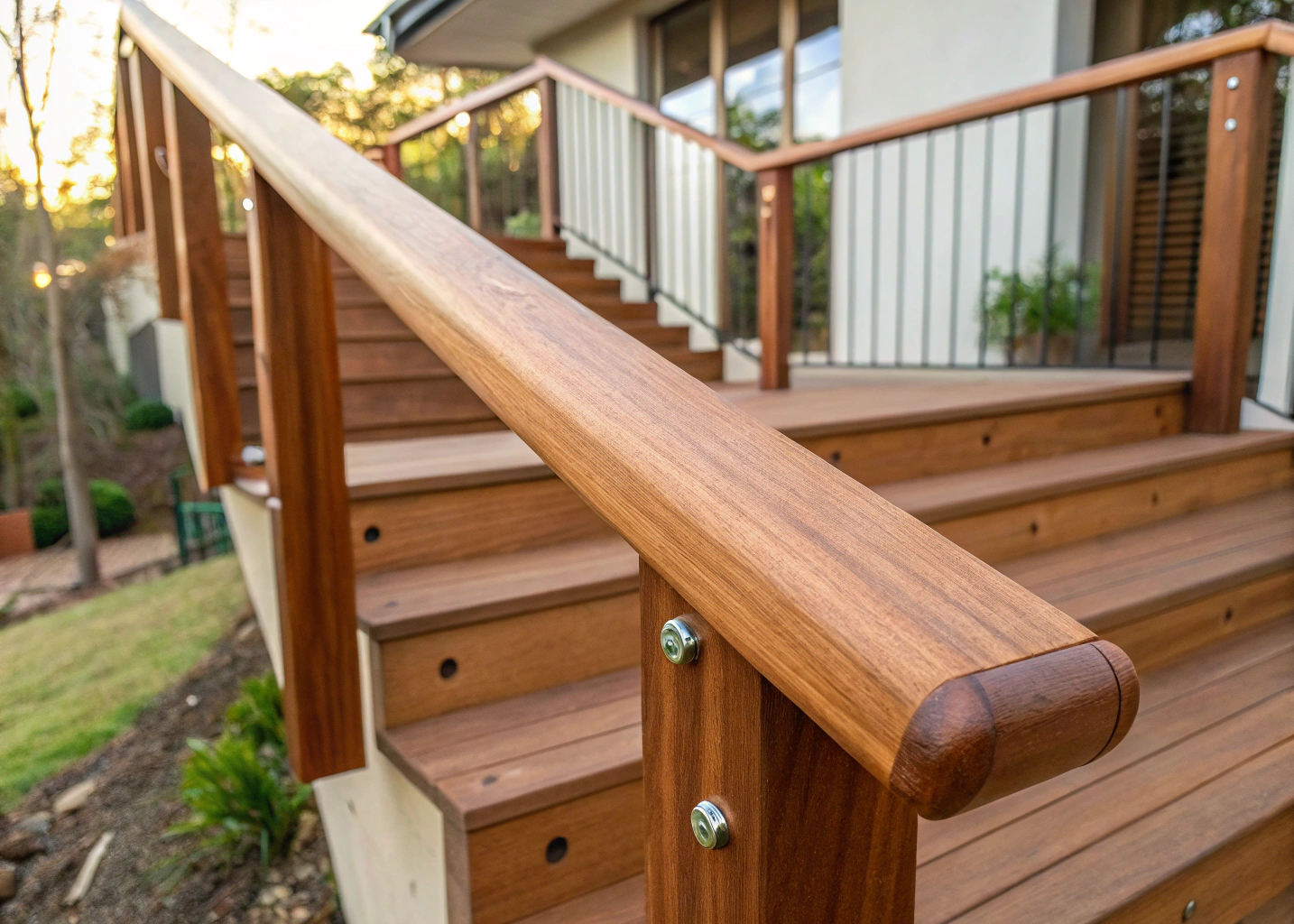
Handrails follow AS 1657, and the big requirement here is continuous graspability. That means no gaps, no breaks in the rail, nothing that stops your hand running smoothly from top to bottom. Height specs apply too, and they’re different to balustrade heights, so this isn’t something you can just borrow the same measurements for.
One thing people don’t always realise — if you’ve got a set of deck stairs with three or more risers, you need a handrail on at least one side, even if the rest of the deck doesn’t need a full balustrade. We get called out for this a fair bit on deck builds where the handrail got forgotten until the final inspection.
Pool Fence Balustrade Compliance
If your balustrade is doing double duty as part of your pool fence line, there’s another layer of rules on top — AS 1926.1. Pool barriers have to be genuinely non-climbable, which is stricter than standard balustrade requirements. Gates need to be self-closing and self-latching, no exceptions.
Once the installation’s done, you’ll need pool barrier certification before that fence is signed off as compliant. We’ve seen plenty of beautiful balustrades around Newcastle pools that look the part but would fail a pool safety inspection on day one — usually because of gate hardware or a gap that’s slightly too generous. Worth getting this checked properly rather than finding out the hard way.


FAQ About Handrail & Balustrade Installation
Do I need council approval for a handrail or balustrade in Newcastle?
Most of the time if you’re just replacing or adding a balustrade to an existing deck that’s already approved, you won’t need a fresh council application — but if you’re building a new elevated deck or balcony from scratch, the balustrade gets covered under that same approval. I’d always say give Newcastle City Council or Lake Macquarie Council a call before you start if you’re not sure, because rules can shift depending on your block and how high you’re building. Better to ask first than rip out a finished rail because it wasn’t ticked off properly.
How long does a handrail or balustrade installation actually take?
For a standard set of deck stairs with a single handrail, you’re usually looking at half a day to a full day once we’re on site. A full balustrade run around a deck or balcony, especially glass or cable, generally takes one to three days depending on the length and how much fixing prep is involved. Coastal jobs around Merewether or Bar Beach can take a bit longer if there’s existing corrosion on old fixings we need to deal with first.
Will salt air ruin my balustrade if I live near the beach?
It depends what you go with — that’s the honest answer. Untreated steel fixings or cheaper aluminium will start showing rust and pitting within a couple of years out at Merewether or Bar Beach, but marine-grade stainless cable, properly powder-coated aluminium, or glass with quality fixings will handle Newcastle’s coastal air without much drama. If you’re right on the coast I’ll always steer you toward the higher grade fixings even if it costs a bit more upfront, because redoing corroded hardware in five years costs a lot more.
Can I keep my old balustrade and just add a handrail?
You can, as long as the existing balustrade actually meets current height and climbability rules — a lot of older Newcastle homes have balustrades that don’t, especially the horizontal rail style common in 1970s and 80s builds. I’ll always check the existing structure first before adding anything new, because there’s no point bolting a compliant handrail onto a balustrade that’ll fail inspection anyway. Sometimes it makes more sense to do both at once and avoid a second job down the track.
What's the most low-maintenance option for a Newcastle deck or balcony?
Cable and glass balustrades both sit pretty low on the maintenance side once they’re installed properly, mainly just a wipe down now and then to keep the salt residue off if you’re near the water. Powder-coated aluminium is the other strong option if you want something that genuinely doesn’t need touching up year to year. Timber’s the one that needs the most ongoing love — oiling or repainting every year or two — so if low-maintenance is the priority I’d point you toward metal, glass or cable first.
Can I get a handrail or balustrade installed without disrupting my whole deck?
In most cases yes, we install the handrail or balustrade as a standalone job without needing to touch the existing deck structure underneath, as long as the framing is solid and was built to handle the fixing loads. If the deck’s older or we find the framing’s not up to it once we get in there, we’ll flag that before going ahead rather than bolting something onto a structure that can’t support it properly. It’s a quick assessment on our end and it saves you from a balustrade that’s only as strong as what it’s fixed into.
Get Your Free Measure and Quote
If you’re finishing off a deck, balcony or staircase and need a handrail or balustrade that’s actually going to pass inspection — not just look good in photos — give us a call. We’ll come out, measure up, talk through your material options, and get you a proper quote with nothing hidden in it.
Looking at other parts of your outdoor project? Check out our balcony construction, elevated deck installation, multi-level deck building, and timber screening and privacy walls services. Or head back to our main Carpenter Newcastle page to see everything we cover.
