
Why Timber for Gazebo Construction
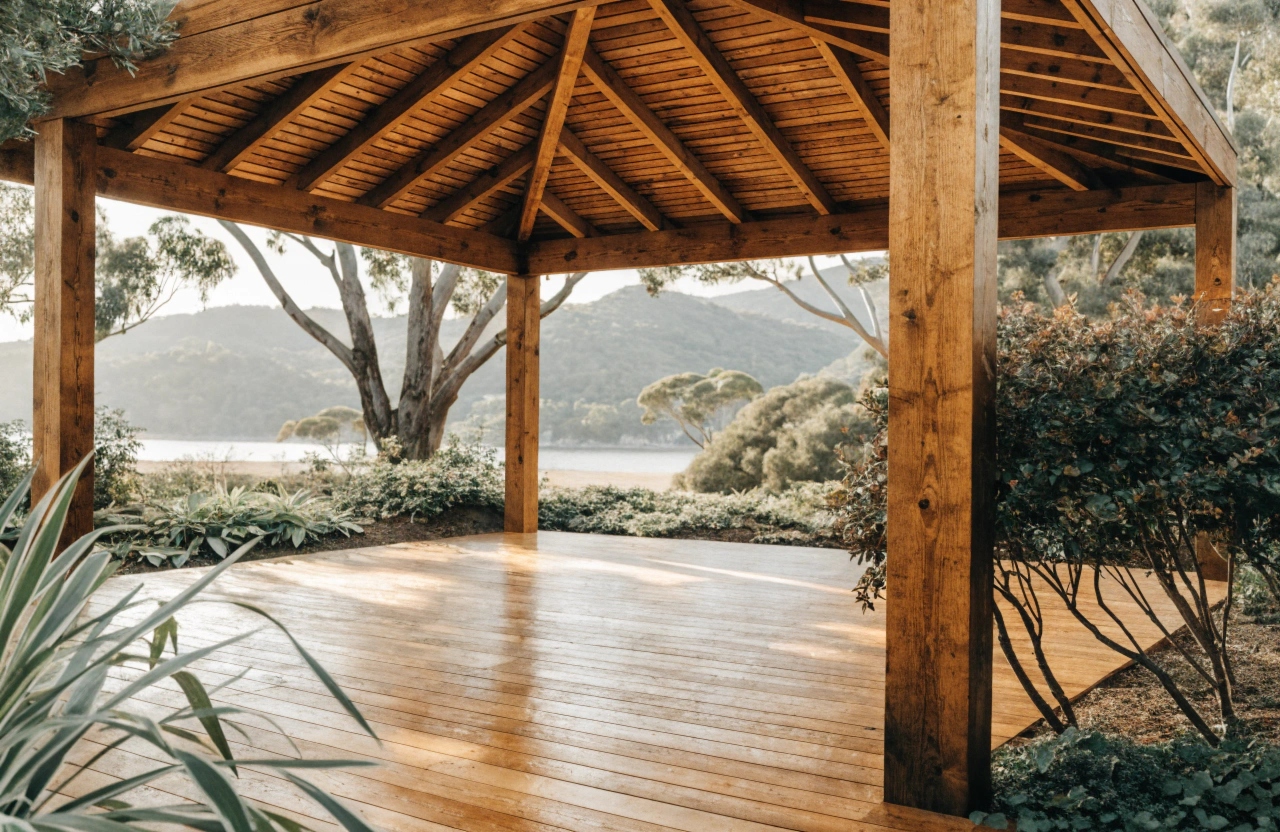
Timber gazebo building starts with an honest comparison: timber offers a level of character and craftsmanship that steel and aluminium alternatives can’t reproduce. A gazebo built in metal is manufactured to a set pattern. A gazebo built in timber is shaped, profiled and detailed by hand, which means the finished structure carries a presence and individuality that prefabricated options don’t offer.
Natural character and warmth sit at the centre of timber’s appeal. The grain, the colour variation, the way light moves across a timber surface — these give a gazebo an organic quality that suits garden and landscape settings far better than a manufactured metal frame.
Detailing and profiling are where timber earns its reputation among clients who want something more considered than an off-the-shelf structure. Timber members can be profiled, chamfered, carved and decorated in ways that metal simply doesn’t allow, giving us the scope to build gazebos with genuine architectural detail.
Garden integration is a practical advantage as much as an aesthetic one. Timber sits naturally alongside plantings, lawns and established landscaping, rather than standing apart from it the way a metal structure often does.
Structural versatility rounds out the case for timber — custom footprint shapes, decorative roof framing and non-standard designs are all achievable with correctly specified timber construction, and a well-maintained hardwood gazebo delivers a long service life above ground.

Construction and Joinery Detail
Timber gazebo building is defined by the quality of its joinery. This is the single biggest differentiator between a gazebo that stands solid for decades and one that loosens, twists or fails within a few years — and it’s where our attention to detail matters most.
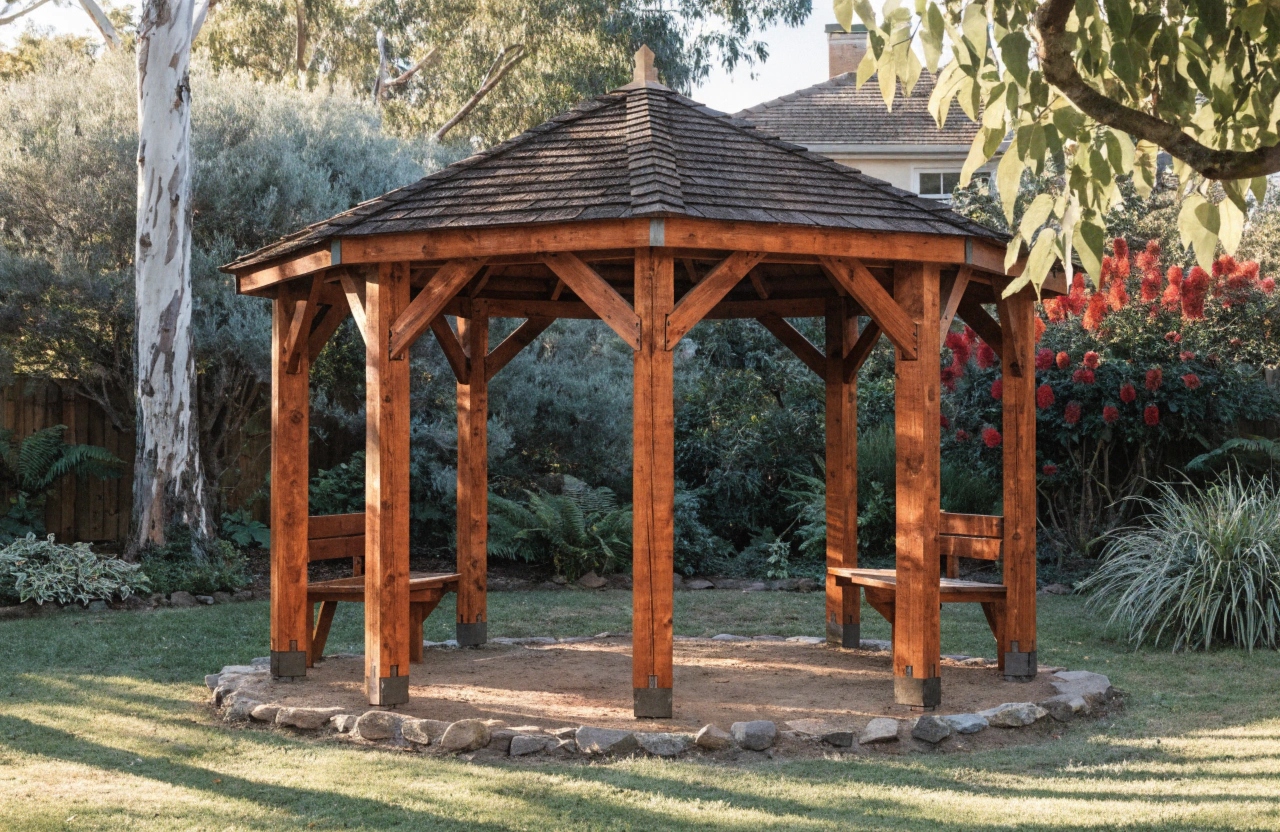
Post to beam connections are built using mortise and tenon joinery, bolted connections, or engineered post cap hardware, depending on the load requirements and the design style of the structure. Each method has its place, and the right choice comes down to the span, the roof load and the visual outcome a client is after.
Rafter to beam connections carry the roof load down through the frame, and correct detailing here keeps the structure rigid under wind and weather over the long term.
Decorative corbels and brackets bring traditional gazebo styling to life, adding visual weight and craftsmanship to the post and beam junctions without compromising structural performance.
Fretwork and decorative timber panels suit open-sided gazebo walls, giving a structure texture and character beyond a plain frame.
Member sizing underpins all of the above. Correctly sized posts, beams and rafters are what keep a gazebo structurally sound and visually proportioned — undersized members compromise both, no matter how well the joinery is finished.
Footprint and Roof Options
Timber gazebo building offers a range of footprint and roof configurations, and the right combination comes down to the garden setting, the intended use and the level of weather protection required.
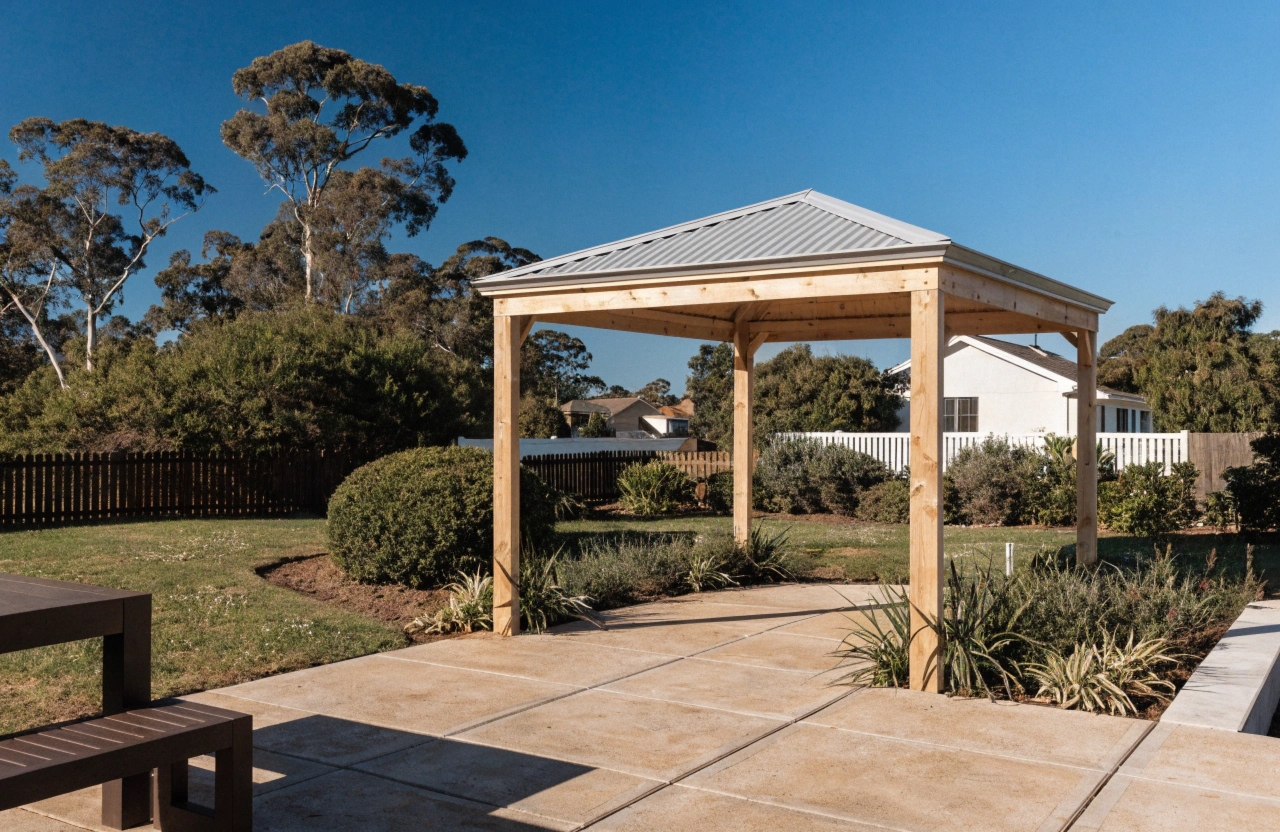
Footprint shapes available in timber construction include octagonal, hexagonal, square and rectangular designs. Octagonal and hexagonal footprints suit a traditional gazebo aesthetic and work well as a standalone garden feature, while square and rectangular footprints offer more usable floor space and integrate more easily with adjoining decking or paved areas.
Open batten roofing delivers a traditional dappled shade effect, letting filtered light through while still defining the structure as a garden feature rather than a fully enclosed space.
Colorbond and corrugated iron roofing provide full weather protection, turning the gazebo into a usable space regardless of rain or harsh sun — a practical option for clients wanting year-round use.
Timber shingle and Zincalume roofing bring a heritage or resort-style aesthetic to the structure, suiting properties where the gazebo is intended as a genuine architectural feature rather than a purely functional shade structure.
Footprint shape has a direct bearing on structural complexity and cost — an octagonal roof with compound rafter angles requires more engineering and labour than a simple rectangular gable, and this is worth factoring into early design discussions.
Finishing and Maintenance
Timber gazebo building doesn’t end once the structure is up — finishing and ongoing maintenance are what protect the investment and keep the gazebo looking and performing well for years to come.
Initial oiling or painting is completed once construction is finished, sealing the timber and bringing out its natural colour and grain from day one. Oiled hardwood species like Merbau develop a richer, deeper tone as the finish cures, while treated pine framing takes paint well for clients after a specific colour scheme.
Maintenance intervals in Newcastle’s UV and coastal conditions are more frequent than they would be inland. Sun exposure and salt air both accelerate the breakdown of timber finishes, so we recommend re-oiling or repainting on a regular cycle to keep the timber protected rather than letting it grey and dry out between coats.
Inspection points worth checking regularly include the base of each post for moisture ingress, particularly where posts meet paving or garden beds, and the connection hardware at post and beam junctions for early signs of corrosion.
Service life for a correctly maintained hardwood gazebo runs into decades rather than years. The timber itself is durable by nature — it’s the finish and the connection hardware that need attention over time, and staying on top of both is what delivers that long-term result.
Approval and Compliance
Timber gazebo building in Newcastle sits within a defined regulatory framework, and understanding where a project falls within it helps set realistic expectations from the outset.
Complying development eligibility under the NSW CDC pathway covers many freestanding timber gazebos, provided the structure meets the relevant size, height and setback criteria. A gazebo that fits within these parameters can often proceed without a full development application, which shortens the path from design to construction.
Size and height thresholds determine whether a project qualifies for the CDC pathway or requires a full DA. Larger gazebos, taller structures, or those positioned close to boundaries are more likely to trigger the DA process, and we work through these thresholds with clients early in the design phase so there are no surprises later.
Licensed builder obligations apply to gazebo construction above the relevant contract value, and working with a licensed builder gives clients the protection and accountability that comes with that licensing.
Footing certification becomes a requirement for larger timber gazebo structures, where an engineer confirms the footing design is adequate for the size and loading of the structure. We manage this documentation process as part of the build, keeping the project compliant from footings through to completion.
Frequently Asked Questions
Cost depends on footprint size, species selection and roof type. Merbau construction with a Colorbond roof sits at the higher end, while treated pine framing with open batten roofing offers a more accessible entry point.
Many freestanding gazebos qualify under the NSW CDC pathway if they meet size and height thresholds. Larger or boundary-adjacent structures may require a full DA.
Merbau is the premium choice for its Durability Class 1 rating and colour. Treated pine offers a cost-effective, paintable alternative with a strong local track record.
A correctly specified and maintained hardwood gazebo delivers decades of service life, provided finishing and connection hardware are maintained on a regular cycle.
Yes, footing design is adapted to suit existing paving or slabs, with certification required for larger structures.
Colorbond and corrugated iron provide full weather protection, while open batten roofing suits a shaded garden feature rather than a fully enclosed space.
Newcastle’s UV and coastal conditions call for more frequent re-oiling or repainting than inland properties, keeping the timber protected between coats.
Octagonal, hexagonal, square and rectangular footprints are all achievable, each with different structural and cost implications.
Yes, treated pine is widely used for gazebo framing across Newcastle, with H4 specification required for posts in ground contact.
Yes, we manage engineering documentation for larger structures as part of the build, keeping the project compliant from footings through completion.
Build a Timber Gazebo That Becomes a Genuine Feature of Your Garden
Timber gazebo building is a project worth getting right from the first design conversation through to the final coat of finish. We bring genuine species knowledge, considered joinery detail and a real understanding of Newcastle’s climate to every gazebo we build, whether that’s a Merbau structure on a Lake Macquarie foreshore block or a treated pine gazebo taking shape in a New Lambton garden.
A free design consultation is the starting point. We’ll talk through footprint options, species selection, roof styles and budget, and put together a design that suits the garden and the way you plan to use the space.
Get in touch today to arrange your consultation and take the first step toward a timber gazebo built to last.
Other services: Gazebo Installation | Outdoor Pavilion Construction | Custom Gazebo Design and Build | Timber Pergola Installation | Gazebo Builder Newcastle
