
Deck Privacy Wall vs Privacy Screen — What's the Difference?
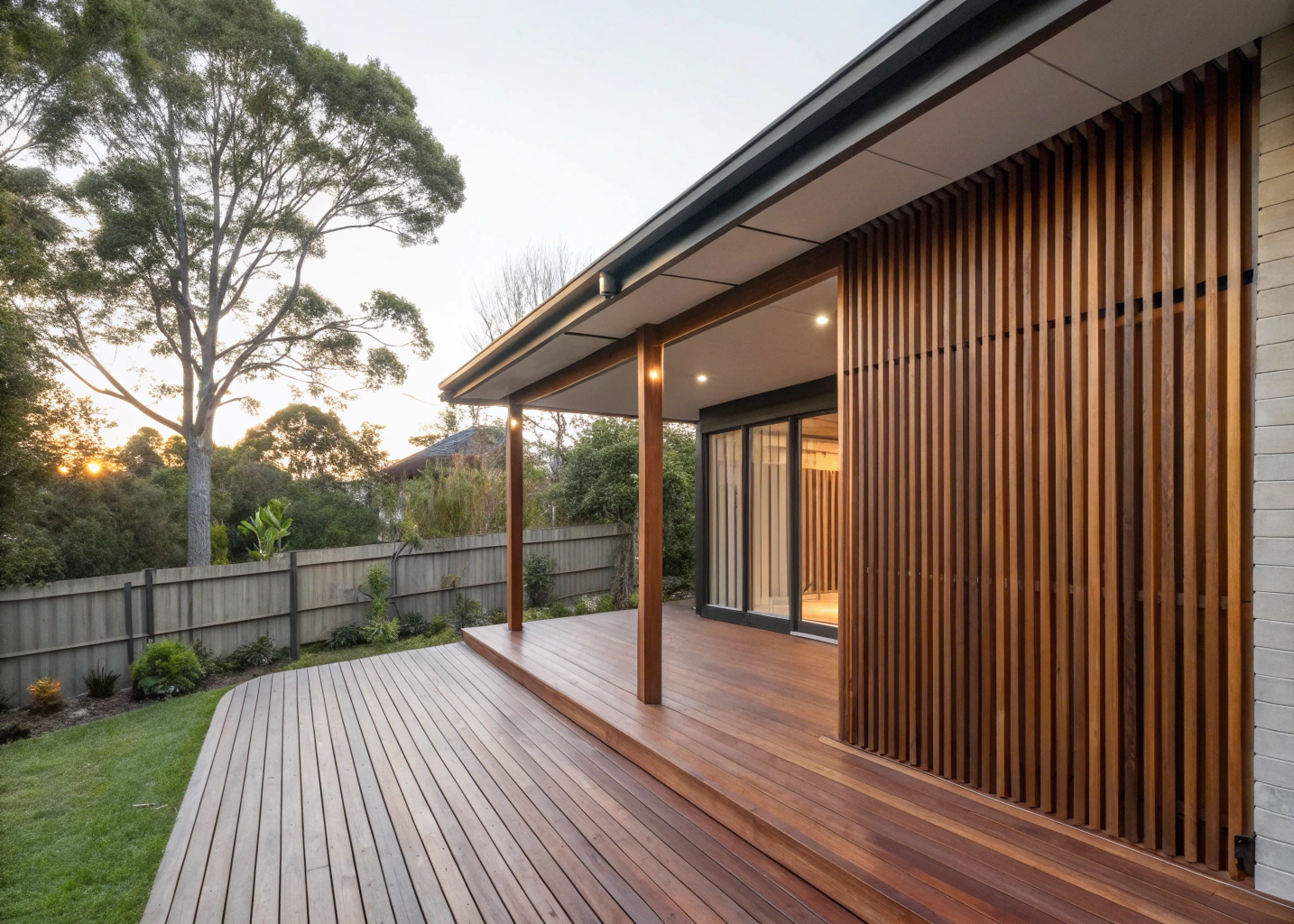
A deck privacy wall is built into the deck’s own frame, posts, or pergola structure — engineered as part of the deck, not added around it. A privacy screen is typically freestanding or surface-fixed, lighter, and not designed to tie into the host structure. The difference isn’t open versus closed — it’s integrated versus added on.
| Deck Privacy Wall | Privacy Screen | |
|---|---|---|
| Structure | Built into deck frame | Surface-fixed or freestanding |
| Wind load | Engineered for it | Rarely considered |
| Materials | Matched to deck | Often independent |
| Permanence | Permanent | Temporary or semi-permanent |
| Compliance | May require assessment | Typically exempt |

When a Deck Stops Feeling Private — and What That's Costing You
A lot of Newcastle homeowners have a deck that looks great but doesn’t get used the way it should. The furniture’s out there. The barbecue’s set up. But the moment you sit down, you’re looking straight into a neighbour’s window — or they’re looking straight at you.
Elevated decks in Hamilton and Merewether sit at eye level with adjoining two-storey homes. Inner suburb blocks have tight boundary setbacks. Rear lane access puts passing foot traffic in direct line of sight. Pool decks in Adamstown and Bar Beach feel more exposed than relaxing.
The deck was built. The money was spent. But the space isn’t delivering what it was supposed to. A purpose-built deck privacy wall closes that gap — turning a deck you tolerate into one you actually want to use.
Deck Privacy Wall Configurations We Install Across Newcastle
End Wall Screens: Closing off the exposed side of an elevated deck. Common in Hamilton, Merewether, and Adamstown where sightlines from neighbouring two-storey homes are the main issue.
Rear Wall Screens: Creating an enclosed feel on ground-level entertaining decks. Suits blocks with rear lane access or close rear boundaries where neighbouring properties sit directly behind the deck.
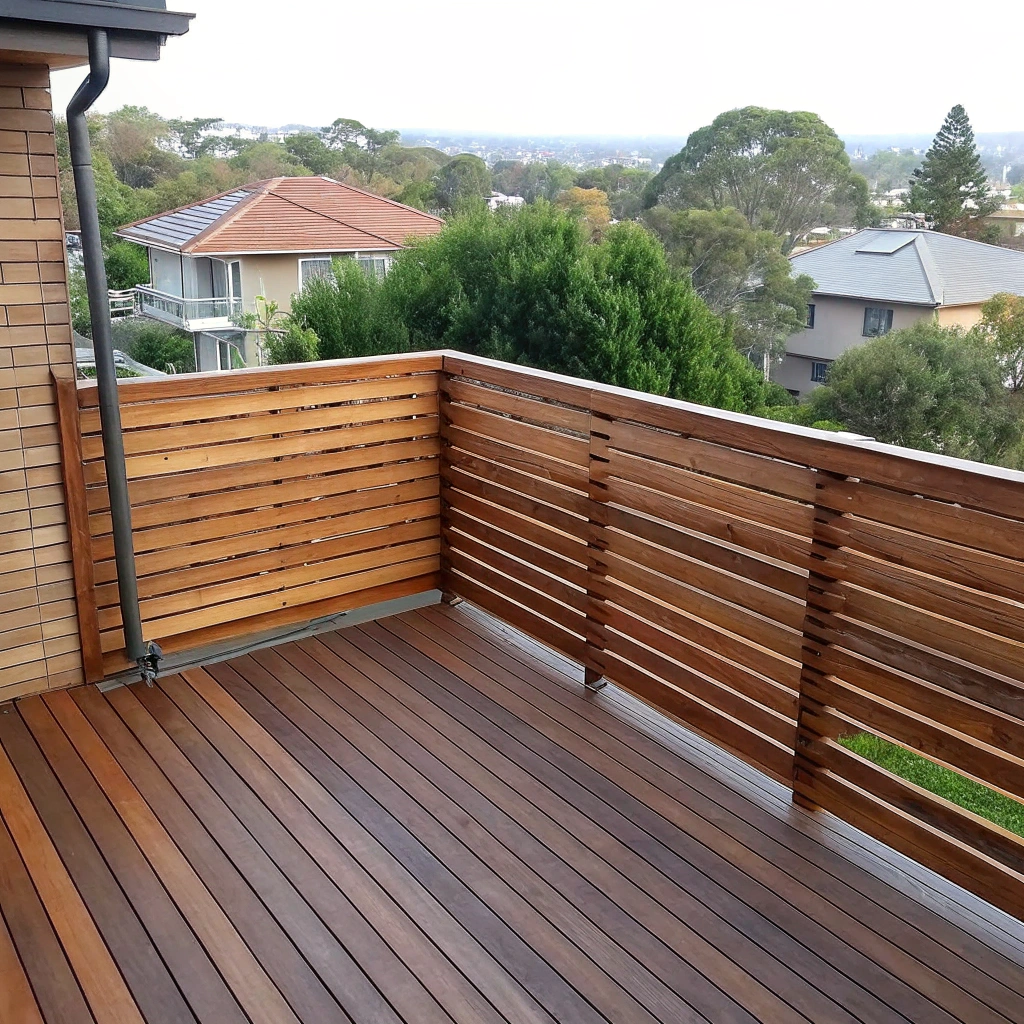
Balustrade-Height Privacy Infill: Replacing open balustrade infill with solid or semi-solid panels. The balustrade framework stays — the visual outcome changes entirely.
Overhead Privacy Screens: Fixed to pergola or shade structure framing for decks overlooked from above. Addresses the two-storey neighbour problem where a side screen alone won’t solve the sightline.
Corner Configurations: Wrapping two sides of a deck for a fully enclosed feel. Common on elevated decks across Fletcher, Rutherford, and the outer growth corridors.
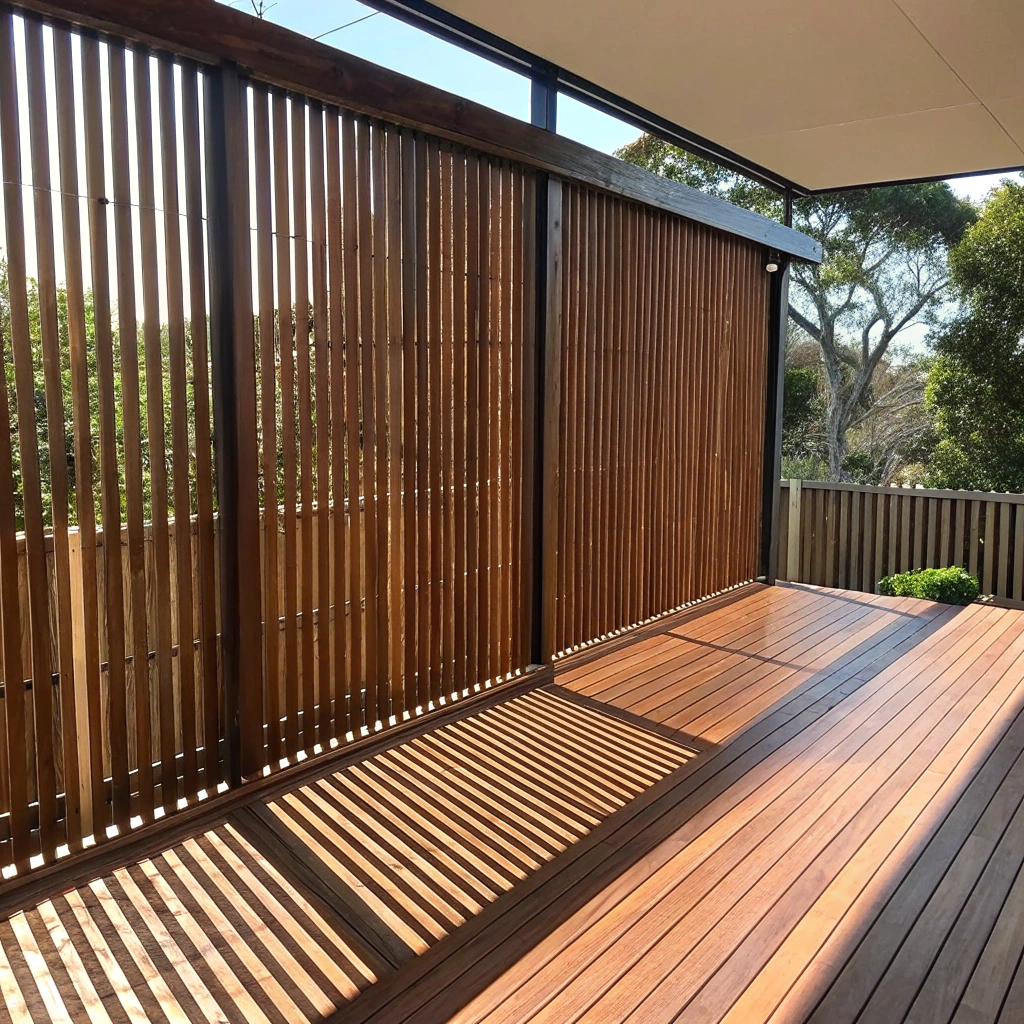
Timber Batten, Composite & Sheet — Choosing the Right Material
Timber Battens: Merbau, treated pine, and hardwood all work well. Batten spacing is the main lever — wider gaps let more light through, tighter spacing increases privacy. Timber can be finished natural or painted but needs periodic maintenance to stay looking good.
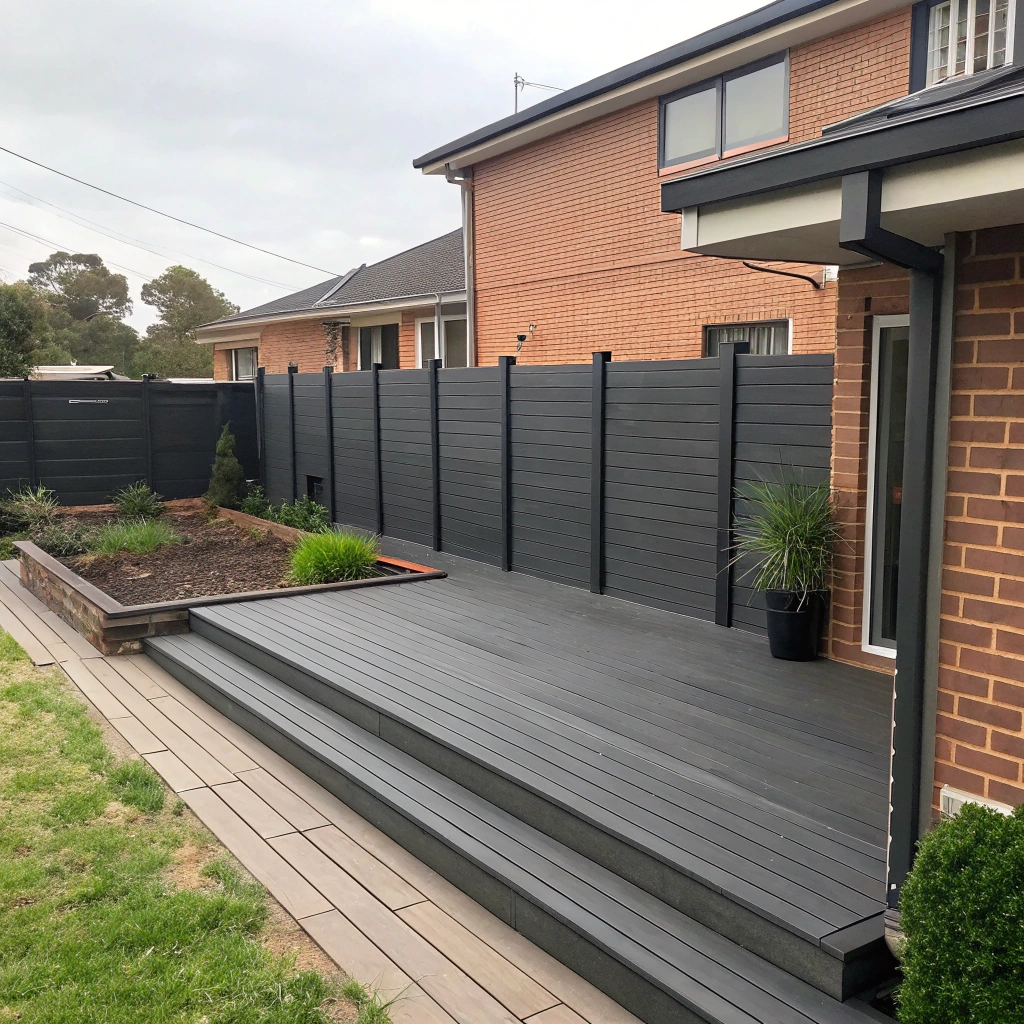
Composite Screening Boards: A low-maintenance alternative. Composite boards resist moisture and fading — useful in coastal and near-coastal Newcastle suburbs where salt air and UV take a toll on untreated timber. No oiling, no repainting, consistent appearance over time.
Sheet Materials: Weathertex and compressed fibre cement are the right call when a fully solid screen is needed over a batten layout. Fixing and framing requirements differ from batten screens — worth discussing at the design stage.
How Deck Privacy Walls Are Structurally Integrated
This is where getting it right actually matters.
A privacy wall isn’t just fixed to the surface of a deck — it loads into the existing frame, posts, or pergola structure. Wind load is the critical variable. A solid or semi-solid screen catches wind, and that lateral load transfers directly into whatever it’s connected to. The existing framing needs to be checked before anything goes up.
Post sizing and connection points matter too, particularly for walls that sit above standard balustrade height. Taller full-height screens may need engineering input before installation.
We assess the existing structure at the design consultation stage — before materials are selected or any work is scheduled. If there’s a structural question that needs an engineer, we flag it early. No surprises on installation day.


Designing Your Privacy Wall to Complement Your Existing Deck
The most common concern we hear is straightforward — will it look like it belongs, or will it look like something added on later?
Getting the design right from the start is what separates a privacy wall that lifts the whole deck from one that looks out of place. A few things we work through at the design stage:
- Batten orientation matched to the existing deck board direction or balustrade style
- Colour and species continuity between the privacy wall and the deck surface
- Integration with built-in seating or planter boxes at the base of the wall
- Lighting built into the privacy wall framing for evening use
The goal is a finished result that looks like it was always part of the deck — because when the design is handled properly, it will be.
Council Approval and Compliance for Deck Privacy Walls in Newcastle
Practical guidance only — not legal advice. Requirements vary by property and should be confirmed at the design stage.
- A balustrade-height privacy infill is treated differently to a full-height privacy wall under Newcastle City Council development standards — height above the deck surface is the key variable.
- Full-height walls that exceed certain height thresholds typically trigger approval requirements, either through a CDC pathway or a DA depending on the specifics.
- Adding a full-height wall to an already-approved deck can change its approval status — this needs to be checked before work starts.
- A CDC pathway is available for many straightforward installations. A DA is required when the proposal falls outside exempt development criteria.
- We identify approval requirements at the design consultation stage — before materials are selected or any work is scheduled.
What to Expect From Our Deck Privacy Wall Installation Process
- On-site design consultation — we assess the existing structure, map the sightlines, and work through material options with you.
- Design and quote — detailed scope with materials specified. No hidden variables.
- Approval pathway confirmed — council requirements identified before any work is scheduled.
- Installation — integrated into the existing deck structure, minimal disruption, site left clean.
- Final walkthrough — we review the finished result against the brief and address anything before we sign off.
Frequently Asked Questions
It depends on the configuration, materials, and size of the wall. Timber batten screens are generally the most affordable option, with composite and sheet materials sitting higher. We provide a detailed quote after the on-site consultation so you know exactly what you’re up for before committing.
Not always. Balustrade-height infill panels are typically exempt. Full-height walls that exceed certain height thresholds may require a CDC or DA approval. We identify what’s needed at the design stage — before any work is scheduled.
Most installations are completed in one to two days depending on the size and configuration. We’ll give you a clear timeframe at the quoting stage.
Yes. Most of our work is on existing decks. We assess the current structure first to make sure it can handle the additional load before anything is designed or quoted.
It depends on your priorities. Timber battens suit most budgets and look great when matched to an existing timber deck. Composite is the better choice if you want something low-maintenance, particularly in coastal suburbs. We’ll walk you through the options at the consultation.
Yes, and we do regularly across Hamilton, Merewether, and Adamstown. Elevated decks require careful attention to wind load and post connections — we assess this as part of the design process.
Ready to Make Your Deck Actually Feel Private?
Find out exactly what’s possible on your deck — our on-site design consultation covers the full picture. Sightlines, structural requirements, material options, and council compliance, all worked through before you commit to anything.
We work across Hamilton, Merewether, Fletcher, Bar Beach, and everywhere in between — timber batten, composite, and sheet material options available to suit your existing deck and budget.
Call Decking Newcastle today on 0266991487 or get in touch to book your free on-site consultation.
