
Can You Extend an Existing Deck?
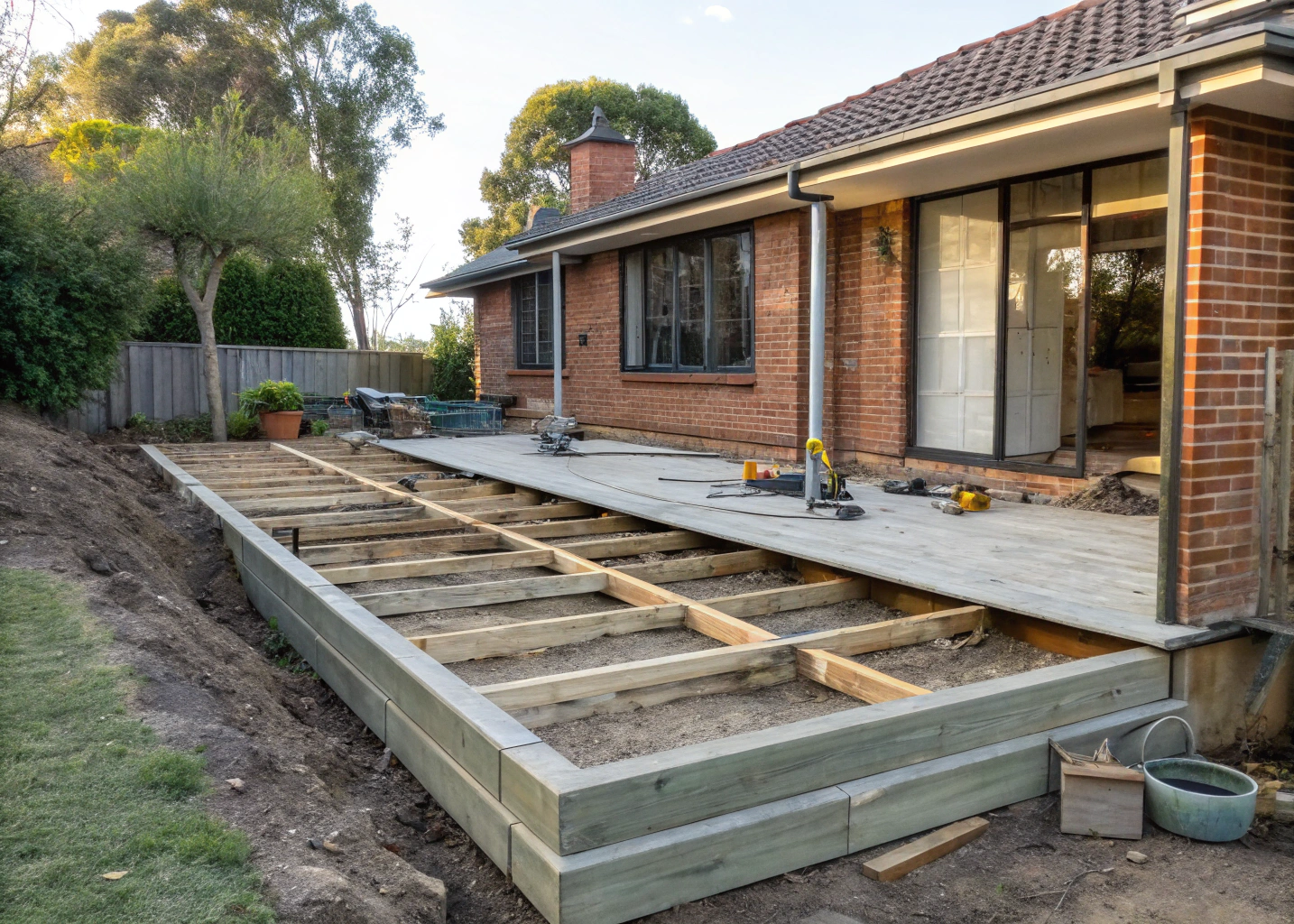
Yes — extending an existing deck is achievable and common across Newcastle properties. But whether it’s the right move, and how it gets done, depends on a proper structural assessment first.
Three things we check before any extension work begins:
- Subframe and footings — are the existing bearers, joists, and footings in good enough condition to support additional structure and load?
- Timber species and board matching — can the new decking be matched closely enough to the existing boards for a consistent finish?
- Council approval requirements — does the extension trigger a complying development certificate or a full development application under NSW provisions?
In NSW, any deck extension involving structural elements must be carried out by a licensed builder. We assess, advise, and manage the full process from inspection through to completion.

Why Extend Your Deck Instead of Starting From Scratch
When an existing deck isn’t big enough anymore, the first question is whether to extend what’s there or pull it all down and rebuild. The answer comes down to what’s underneath.
When Extension Makes Financial Sense
If the existing footings, posts, and bearers are in good condition and no remediation is needed, extending is almost always the more cost-effective option. You’re building on a foundation that’s already there — that saves time, materials, and money. For most Newcastle homeowners, this is the scenario we find on-site.
When a Full Rebuild Is the Better Option
Sometimes extension isn’t the right call. If the existing subframe has rot, the original build wasn’t compliant, or the footings aren’t sized to carry additional load, rebuilding from scratch gives you a better result and a safer one. We’ll tell you honestly which way to go after we’ve had a look.
What Drives Most Newcastle Deck Extension Enquiries
There’s usually a specific trigger behind a deck extension enquiry. Here are the four we hear most often.
The Family Has Outgrown the Space: Kids get older, entertaining increases, and a deck that was fine for two adults and a toddler no longer cuts it. More people need more room — it’s that simple.
A Pool or Spa Has Been Added: A new pool or spa changes the whole backyard dynamic. Suddenly there’s poolside space that needs proper decking around it, and the existing deck doesn’t reach.
A Pergola or Roof Structure Is Going In: When a pergola or covered roof structure is added, the covered area often extends beyond the existing deck footprint. The decking needs to follow.
A New Door or Room Addition Has Created an Awkward Transition: A renovation that adds a new sliding door or room extension can leave an odd gap between the interior and the outdoor area. An extension fixes that connection cleanly.
Assessing Your Existing Deck Before Any Extension Work Begins
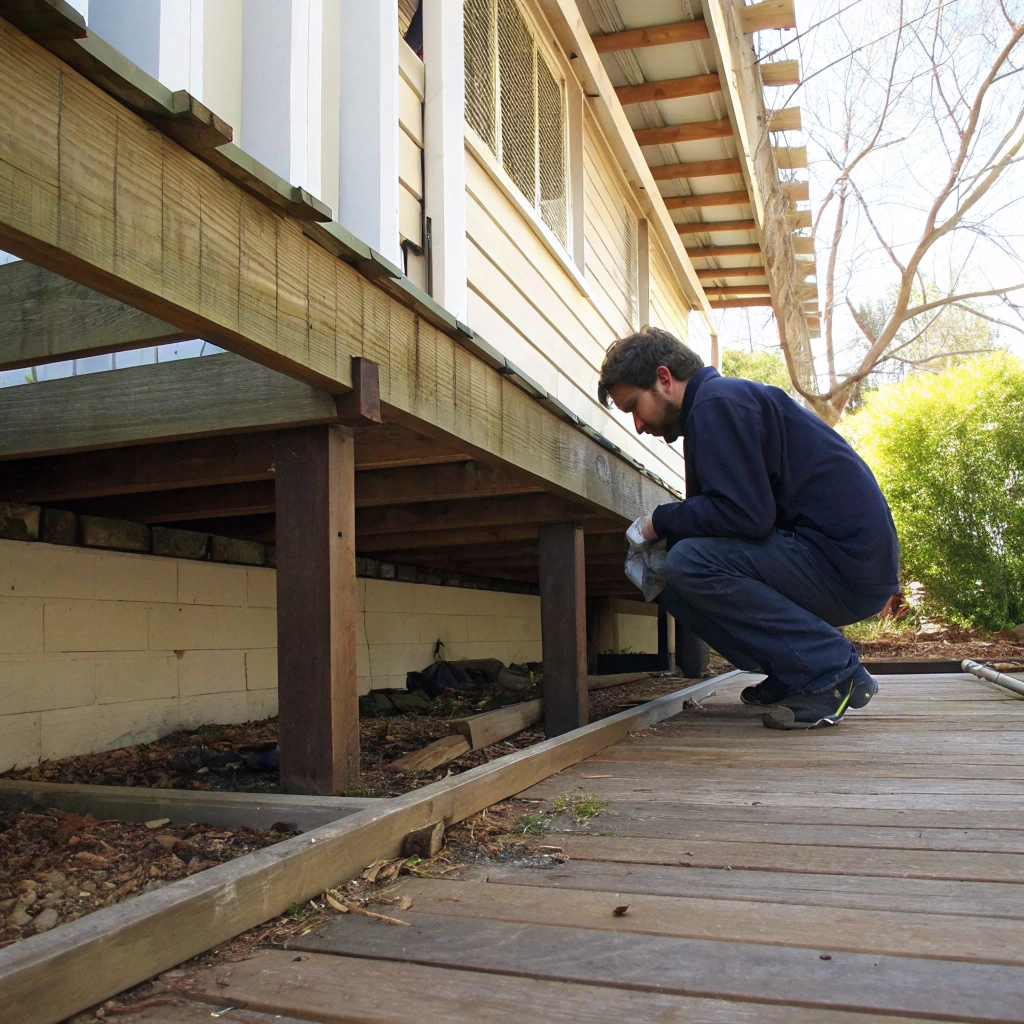
Before any extension work starts, we carry out a full on-site assessment. This is the step that determines everything — what’s possible, what method we use, and what the job will cost.
Subframe and Footing Condition: We check the bearers and joists for rot, movement, and general integrity. We look at footing depth and type. If there are signs of deterioration or instability, we flag it before a single new board goes down.
Existing Compliance Status: We check whether the original deck was approved and whether that approval history affects the pathway for the extension. This matters more than most people realise when it comes to getting the new work signed off.
Load Capacity for the Extended Structure: Adding more deck area means adding more load. We check whether the existing members can carry the additional span before we tie anything in. If they can’t, we tell you — and we explain the options.
Timber and Composite Matching — What's Realistic and What's Not
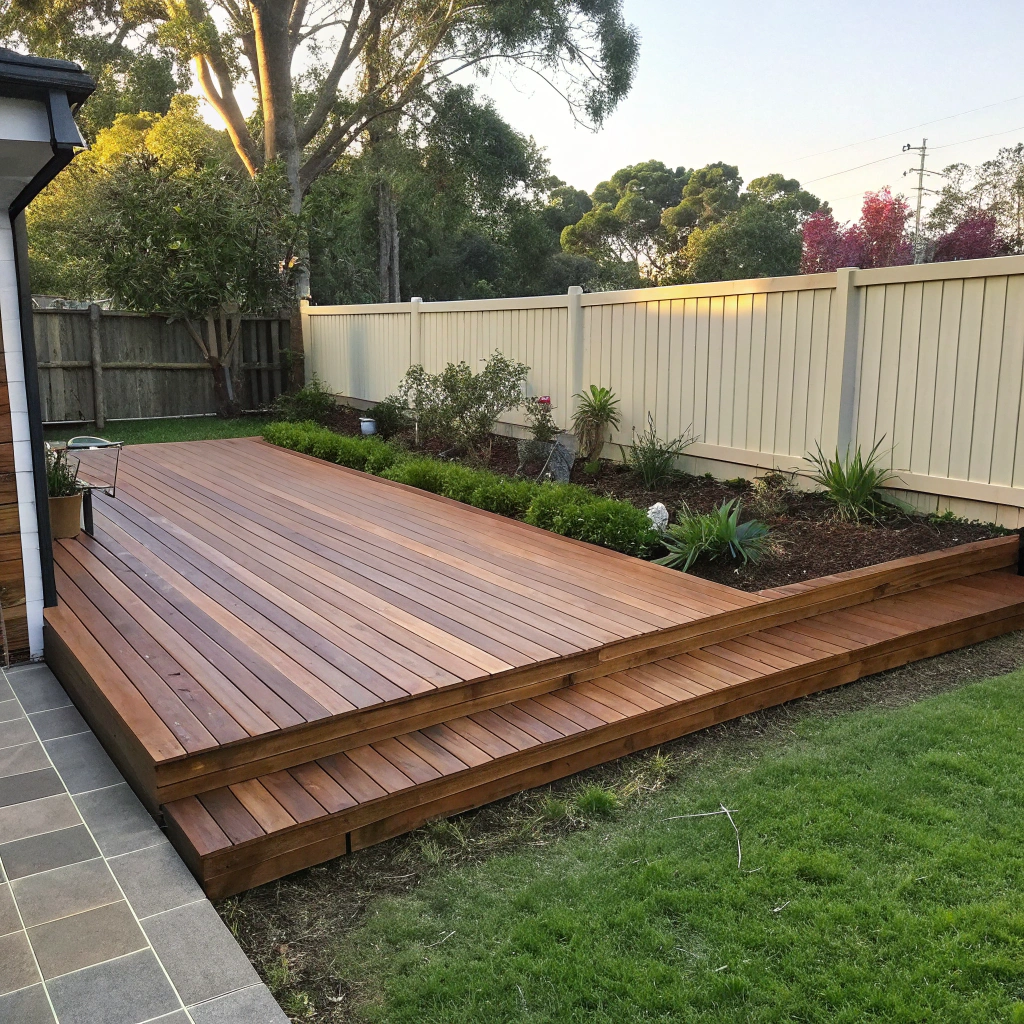
We’ll be straight with you here — a perfect match on weathered timber is rarely achievable. If your existing deck has been down for five or ten years, the boards have greyed, weathered, and changed colour in ways that new timber simply won’t replicate straight away.
What we can do is match the species as closely as possible, work with stains to bring the tones together, and advise on weathering timelines so you know what to expect. Where the original decking was a composite product that’s still in production, matching is more straightforward — we source from the same range where we can.
The honest position is this: a well-executed timber deck extension that blends over time is a far better outcome than one that’s oversold as seamless from day one. We’d rather set the right expectations upfront than have you disappointed six months down the track.


Design Options When Extending Your Deck
Not every extension is a straight addition of extra boards in the same direction. Here are four design approaches depending on what your yard and your situation call for.
| Design Option | What It Achieves | Best Suited To |
|---|---|---|
| Straight extension (same level) | Increases overall deck area seamlessly | Entertaining and dining space |
| Step-down addition | Adds a second level without altering the existing structure | Sloped yards and pool access |
| Board direction change | Visually unifies old and new sections | Where timber matching isn’t achievable |
| Shape change (corner wrap or bay) | Improves flow and usability of the outdoor area | Irregular yard layouts and pool surrounds |
The right option depends on your yard, your existing structure, and what you’re trying to achieve. We work through the design with you on-site once we’ve assessed what’s there.
How New Framing Integrates With Your Existing Substructure
How new framing connects to what’s already there depends on the condition and configuration of the existing substructure. There are three approaches we use.
Tied-In Integration
Where the existing subframe is verified as structurally sound, we connect new joists directly to the existing rim joist. This creates a unified structure and is the cleanest outcome where conditions allow.
Freestanding Extension
Where the existing structure can’t be verified or isn’t suitable for tie-in, we build an independent subframe with its own posts, bearers, and footings. It sits alongside the existing deck without relying on it structurally.
Remediation Before Extension
Sometimes existing members need reinforcing or replacing before new work can proceed. We carry out that remediation first — there’s no point building a new extension off a subframe that isn’t up to the job.
Council Approval and Compliance for Deck Extensions in Newcastle
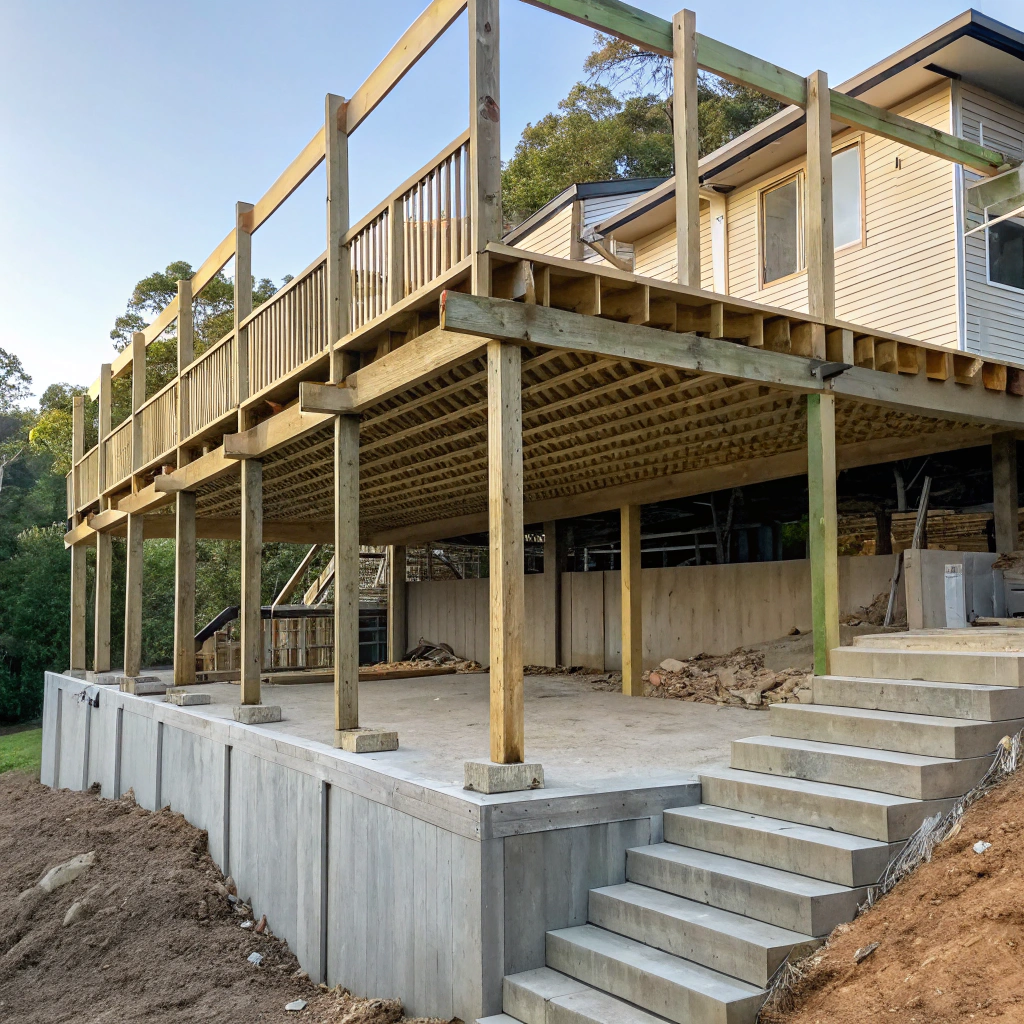
Deck extensions in NSW sit within a clear approval framework. Here’s what you need to know.
- Complying development thresholds — many extensions can be approved as complying development under NSW CDC provisions without a full DA. Size, height, and setback all factor in.
- When a DA is required — if the extended footprint exceeds CDC thresholds or the site has non-standard conditions, a development application to Newcastle City Council is required before work starts.
- Licensed builder obligations — any structural deck extension in NSW must be carried out by a licensed builder. Owner-builder limitations apply.
- Existing approval status — whether the original deck was formally approved affects how the extension application is assessed. We check this on-site.
- We manage the process — we advise on the right approval pathway for your property before anything else happens.
Frequently Asked Questions
We assess the subframe, footings, and timber condition on-site before we quote anything. If the structure underneath is sound, extension is usually straightforward. If there are issues, we’ll tell you exactly what they are and what the options are.
It depends on the size of the extension, the materials used, and the condition of the existing subframe. Where remediation is needed before new work can proceed, that adds to the cost. We give you a full itemised quote after the on-site assessment so there are nothing unexpected.
Often the extension can be approved as complying development under NSW CDC provisions without a full DA. It depends on the size, height, and setback of the finished structure. We check what applies to your property as part of our assessment.
We match the species as closely as possible and can use staining to bring the tones together. A perfect match on weathered timber isn’t always achievable, but we set realistic expectations upfront and work toward the best outcome available.
Most residential extensions take between two and five days on-site depending on size and complexity. Material lead times can add to the overall timeline. We give you a clear schedule before work starts.
Yes. A step-down addition is often the right approach on sloped yards — it adds a second level without altering the existing structure and works well for pool access and entertaining areas.
Get a Free On-Site Assessment
If your existing deck no longer fits the way you use your outdoor space, an extension could be the most straightforward fix. We’ll come out, assess what’s there, and give you an honest quote based on what we actually find.
Call Decking Newcastle on 02 6699 1487 or send us a message using the contact form below to book your free on-site assessment.
Related Services
- Deck Repair and Restoration Newcastle
- Custom Deck Design and Build Newcastle
- Timber Decking Newcastle
- Composite Decking Newcastle
- Deck Builders Newcastle
