
What is an elevated deck?
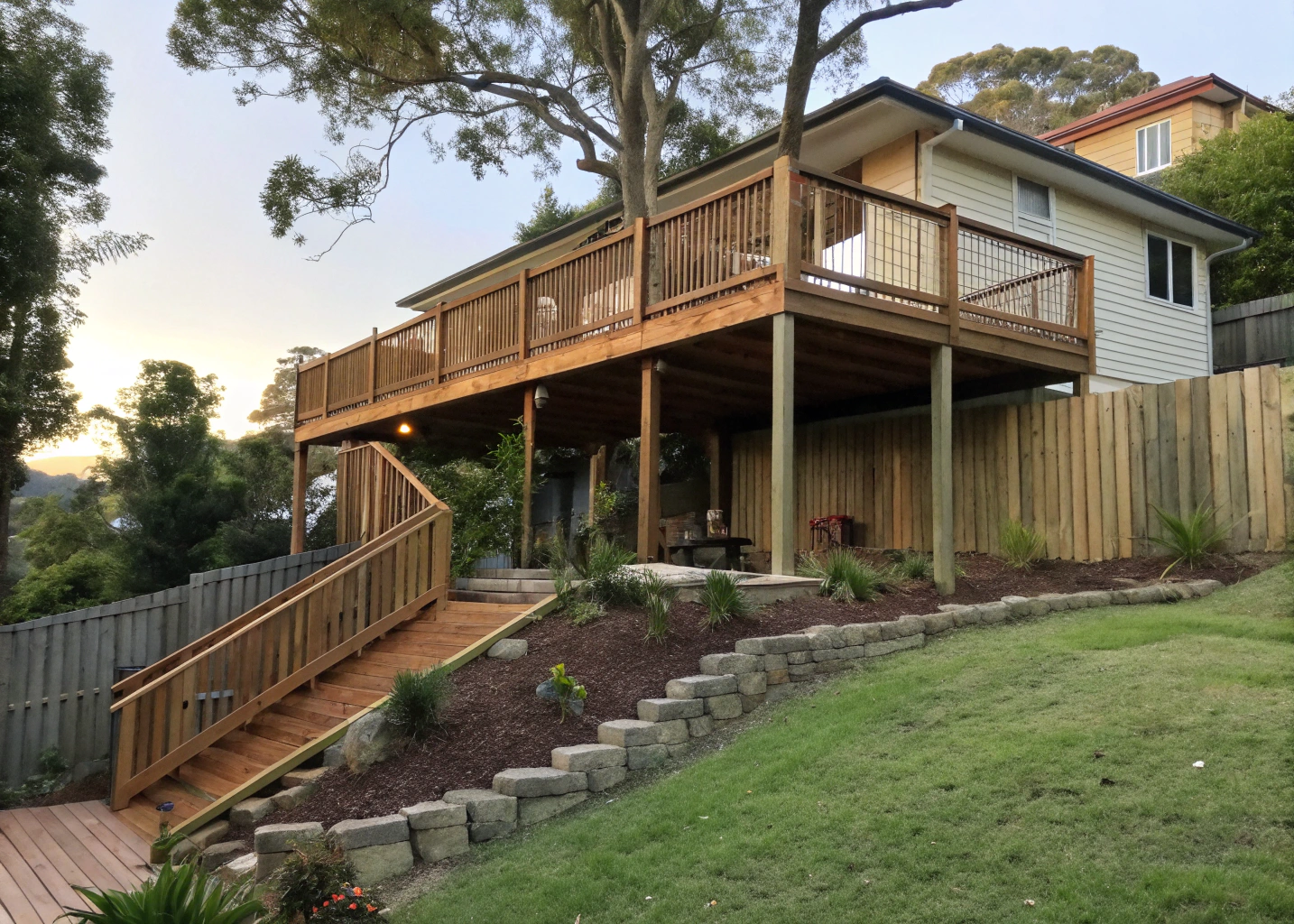
An elevated deck is a timber or composite platform built more than 600mm above natural ground level. In NSW, once a deck crosses that 600mm mark, it’s classified as an elevated structure — which means additional engineering requirements, mandatory balustrades, and in most cases, council approval.
Unlike a ground-level deck, an elevated structure requires:
- Engineer-certified footings — concrete piers sized for the height and load of the specific structure
- Engineered post and bearer design — verified against Australian span table standards for the applicable height
- Compliant balustrades — minimum 1m high for decks over 1m above ground, with child safety requirements
- Licensed builder construction — mandatory in NSW for structures requiring council approval
- Staged inspections — footing, frame, and final stages signed off by a certifier

Why Sloped Newcastle Blocks Demand a Different Approach
Many of Newcastle’s middle and outer suburbs were built on hilly ground. In areas like Merewether Heights, Whitebridge, Cardiff Heights, Adamstown Heights, and Glendale, it’s common for the rear yard to drop well below the back door — sometimes by a metre or more.
A ground-level deck isn’t an option on these blocks. To build one, you’d need to retain and fill the slope first — and that bill can quickly outrun the cost of the deck itself.
An elevated deck solves this without disturbing the ground. The structure rises from engineered piers set into the slope, bringing the platform up to the level of your back door. Less disruption, less cost, and the natural yard stays intact below.
Decking Newcastle has worked on these site types many times. We know what sloped blocks demand and we design for it from day one.
Structural Engineering Requirements for Elevated Decks in Newcastle
Why Elevated Decks Require an Engineer
Once a deck exceeds 600mm above ground, engineer involvement isn’t optional in NSW. The engineer reviews the entire structure and certifies it’s safe to build. For the homeowner, that certification matters — without it, insurance cover and liability can both become complicated if something goes wrong.
What the Engineering Package Covers
The scope covers footing design, post sizing, bearer and joist verification against Australian span table standards, connection hardware, and the certified documentation the certifier needs at each inspection stage. Everything is calculated for your specific site — not copied from a generic template.
How Decking Newcastle Manages the Engineering Process
You don’t need to find your own engineer. We manage the engineering as part of the project from start to finish. One point of contact, one coordinated process — the technical side is handled so you’re not chasing anyone yourself.
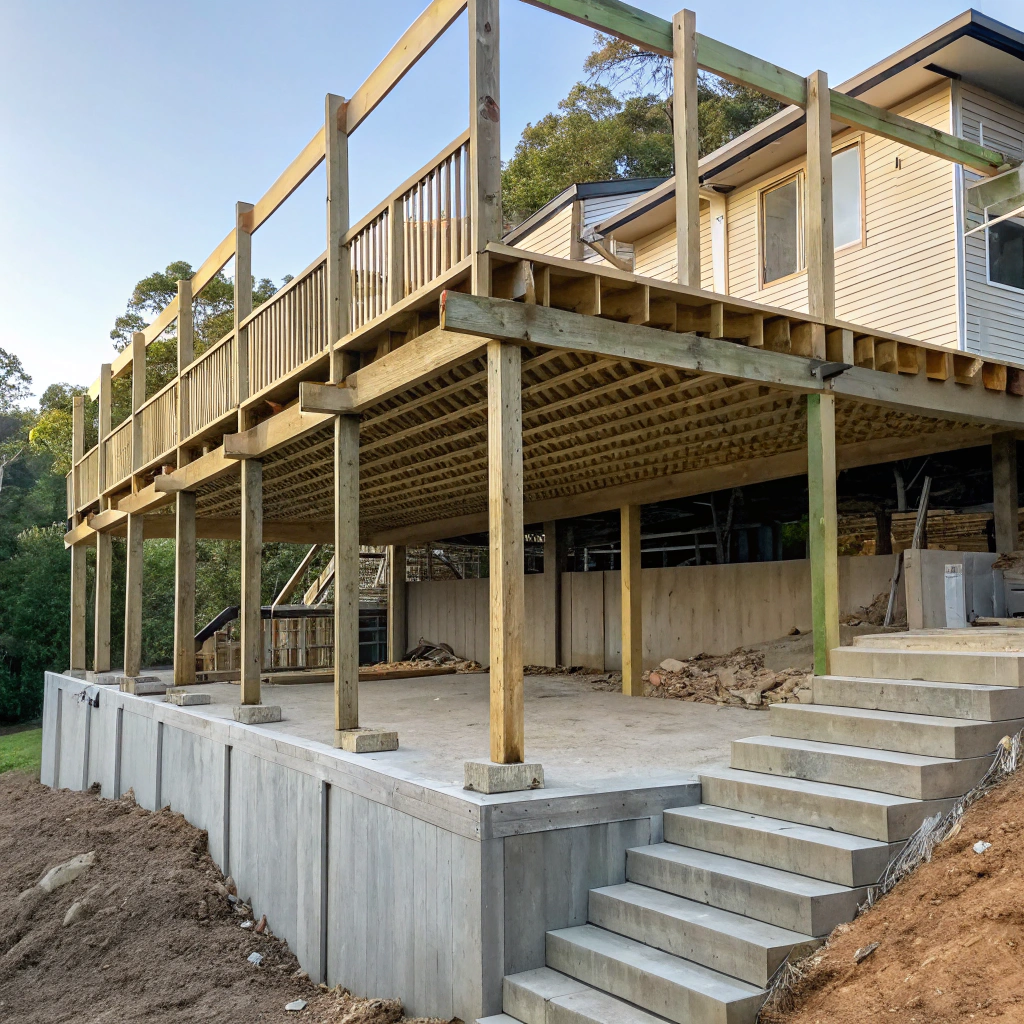
Footing and Post Design for Sloped Newcastle Blocks
Concrete Pier Sizing and Depth: Footing size and depth vary based on deck height, load, and soil type. Some Newcastle sites — particularly in coastal and clay-heavy areas — need a soil assessment before pier specs can be confirmed. All footing designs are engineer-determined for the specific project.
Post Selection and Sizing for Elevated Loads: As height increases, so do the load demands on the posts. Timber and steel are both viable options, but each carries different durability considerations — especially in Newcastle’s coastal environment where salt air and moisture affect long-term performance.
Bearer and Joist Span Compliance: Elevated subframes carry different load assumptions than ground-level builds. Bearer and joist sizing must be verified against the certified engineering design to confirm the structure performs safely at height.
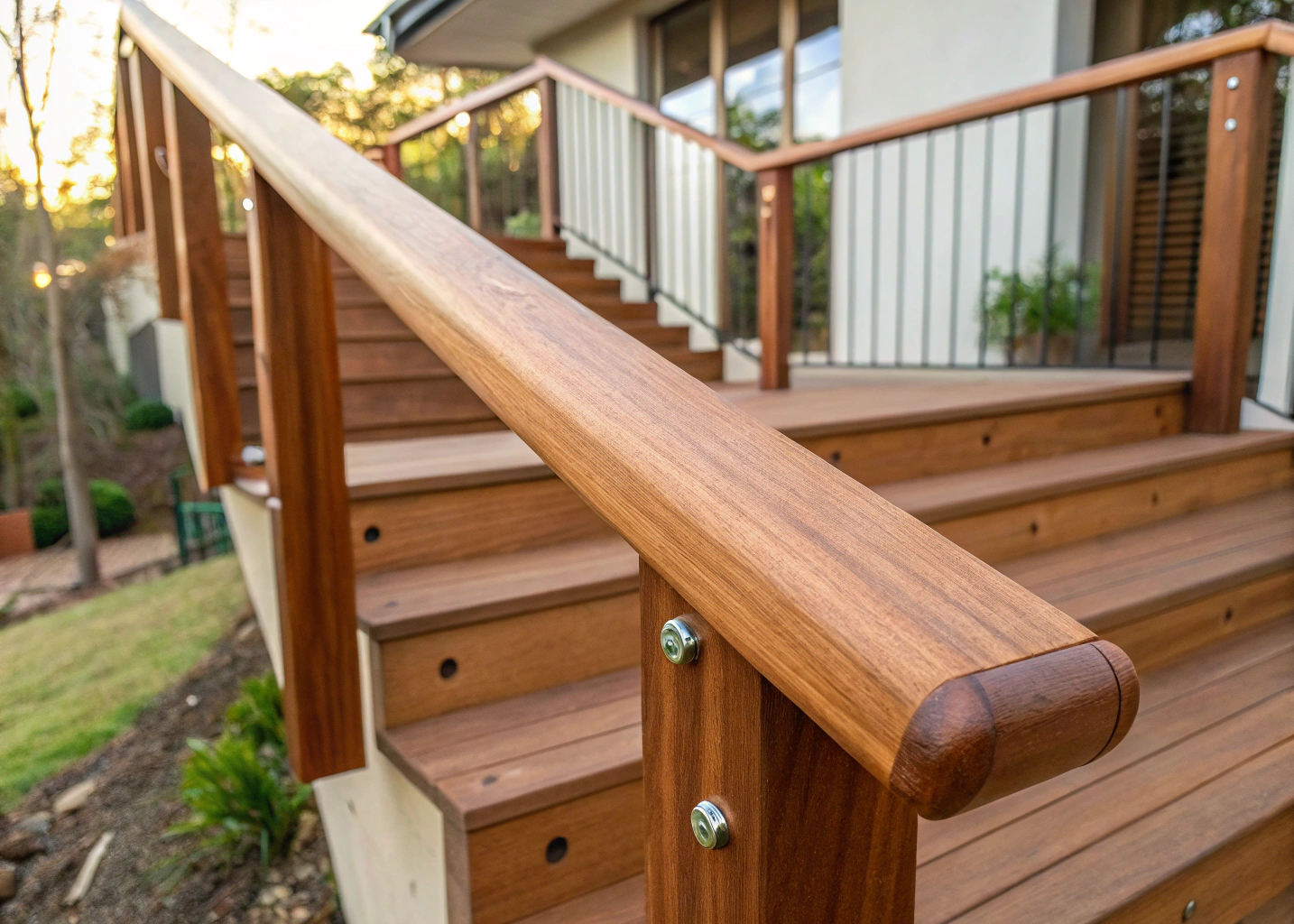
Balustrade and Safety Compliance for Raised Deck Structures
When a Balustrade Becomes Mandatory: In NSW, a balustrade is required on any deck where the fall height creates a safety risk — the trigger point is 1m above ground level. Getting this wrong isn’t just a compliance issue. If someone is injured on an unbalustrated deck that should have had one, the liability sits with the homeowner.
Minimum Height and Climbability Requirements: For decks over 1m above ground, the minimum balustrade height is 1m. There are also child safety requirements built into the rules — no horizontal rails within the climbable zone, and no footholds below 150mm. These requirements exist to stop young children from climbing over or through the balustrade.
Balustrade Material Options for Elevated Decks: Glass, cable, steel, and timber are all viable options for elevated decks. Fixing requirements for elevated balustrades are more demanding than ground-level installations due to increased lateral load. In Newcastle’s coastal market, glass and cable are popular choices for the views they preserve and their resistance to salt air corrosion.


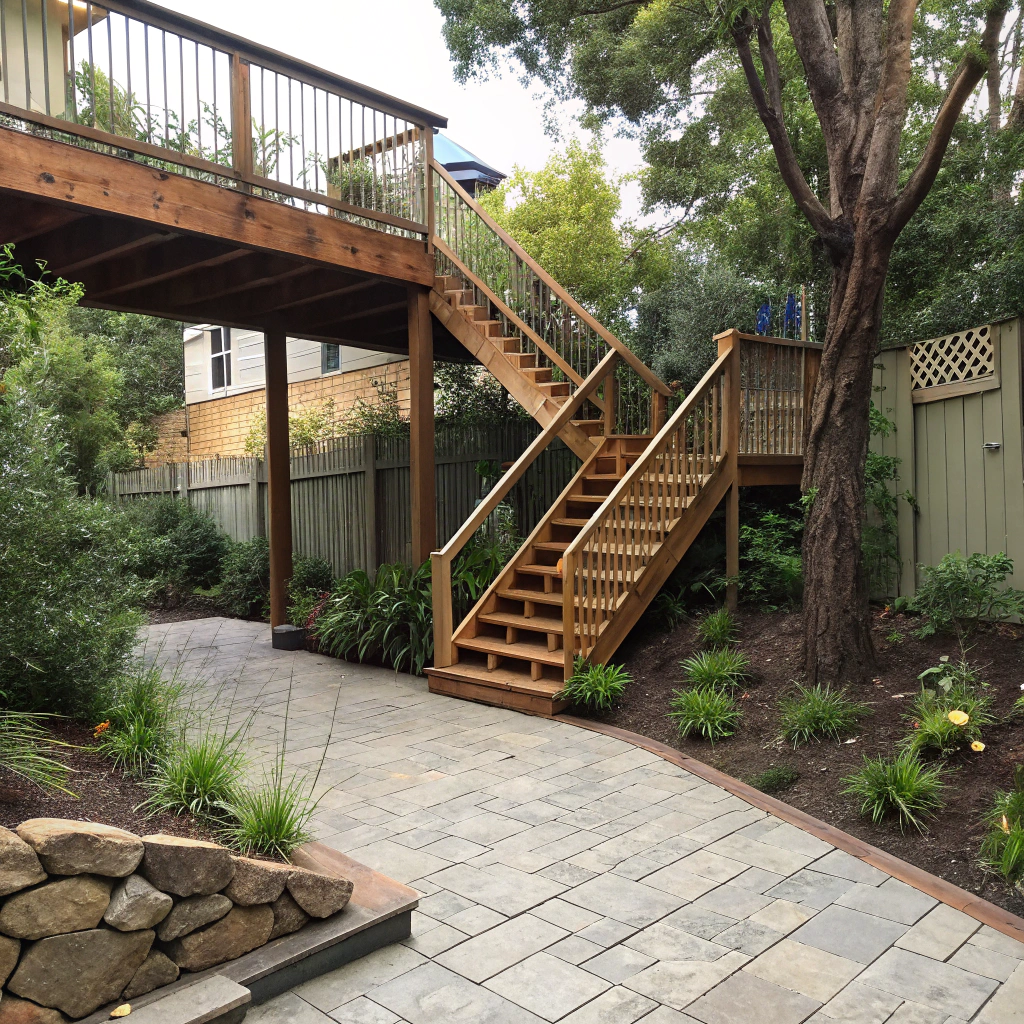
Stair and Access Construction for Elevated Decks
Stair design is one of the most underestimated parts of an elevated deck project. Get it wrong and the finished deck is harder to use, non-compliant, or both.
There are specific requirements that apply to every stair build:
- Rise and going dimensions — each step must fall within the set height and depth range required under Australian standards
- Minimum stair width — stairs must be wide enough to meet access requirements for the structure
- Handrail obligations — handrails are required on stairs above a certain height and must meet grip and continuity requirements
- Landing requirements — longer stair runs require a landing at set intervals
- Integration with ground-level landscaping or paving — the base of the stair needs a stable, level surface to land on
Stair placement and orientation are resolved during the design phase
Decking Material Selection for Elevated Installations
Material choice for an elevated deck goes beyond how it looks. Subframe exposure, ventilation, moisture management, and long-term maintenance access all factor into the decision — particularly on sloped Newcastle blocks where the underside of the deck may be difficult to reach once built.
| Hardwood Timber | Softwood Timber | Composite | Aluminium Subframe | |
|---|---|---|---|---|
| Durability in elevated/exposed conditions | High | Moderate | High | Very High |
| Maintenance requirements | Oiling required | Painting/sealing required | Low | Minimal |
| Coastal suitability | Good with correct species | Moderate | Very Good | Excellent |
| Cost indicator | Mid–High | Low–Mid | Mid–High | High |
| Compliance notes | Species must meet AS span requirements | Treated pine must meet H3/H4 rating for exposed applications | Board and subframe must be installed per manufacturer spec | Engineer confirmation required for subframe connections |
Council Approval and Compliance for Elevated Decks in NSW
When Council Approval Is Required
The key triggers are height above ground, proximity to boundaries, and whether the deck is attached to the dwelling. Decks under 600mm may qualify as exempt development. Above 1m, or where boundary setbacks are tight, a full development application is typically required. Rules vary by site — what applies to one Newcastle block may not apply to the next.
Licensed Builder Requirements in NSW
Any elevated deck requiring approval must be built by a licensed builder in NSW. Homeowners should verify their contractor’s licence through the NSW Fair Trading licence check before signing anything.
The Certifier Inspection Process
Staged inspections are required — footing before concrete is poured, frame before boards are laid, and final before the deck is used. Decking Newcastle manages the certifier engagement as part of the project.
Frequently Asked Questions
In NSW, any deck built more than 600mm above natural ground level is classified as an elevated deck. Once you cross that threshold, additional engineering, balustrade, and approval requirements apply.
In most cases, yes. Height, boundary setbacks, and attachment to the dwelling all affect what approval pathway applies. We assess this as part of every project and handle the approval process on your behalf.
Yes. Once the deck exceeds the 600mm height threshold, engineering certification is mandatory in NSW. We manage the engineer as part of the build — you don’t need to source one yourself.
It depends on the size and complexity of the structure, but most elevated deck builds run between two and four weeks on site. Engineering and approval timeframes add to the overall project timeline and vary by council.
Glass and cable are the most popular choices in Newcastle, particularly in coastal areas. Both perform well in salt air conditions and don’t block views. The right choice depends on your budget, aesthetic, and the structural fixing requirements for your specific deck height.
Most sloped blocks can accommodate an elevated deck, but the engineering requirements vary significantly depending on the degree of slope, soil type, and site conditions. We assess each block individually before providing a quote.
Book a Free On-Site Assessment
Not all elevated deck quotes are equal — site conditions, engineering requirements, and council obligations vary significantly from one Newcastle block to the next.
We visit the site, assess the slope, and give you a clear picture of what’s involved before you commit to anything.
Decking Newcastle
📞 02 6699 1487
